
Housewarming gift formats start with how the household lives
Decide whether your gift is for the residents to enjoy privately or for everyone attending a housewarming gathering. Those are different jobs. A compact box of favourite treats may suit two people over several evenings, while a shared table needs items that can be divided without interrupting the host. Do not treat the guest count as the household size, or buy a party-sized gift for a home where one person will use most of it.
Think about an ordinary week in that home. A household that cooks regularly may welcome a familiar pantry item; someone who eats out may have little use for ingredients requiring preparation. Frequent hosts might appreciate a requested serving piece, whereas a resident with an already complete kitchen may prefer something consumable. Ask a small, concrete question, such as whether they would rather receive something for breakfast or something for the kitchen. That is more useful than asking what looks luxurious.
Set a budget for the complete gift, including its container and any confirmed delivery charge. Then choose one clear purpose rather than adding unrelated extras to make the package look fuller. A thoughtful gift need not fill a shelf or equip a new kitchen. When buying with friends, share the proposed contents before anyone orders, so the household does not receive several versions of the same item or an unexpectedly large collection of things to store.

Choose homeware only when its everyday role is clear
Homeware remains after the wrapping is gone, so its fit matters more than its opening-day appearance. Before choosing a bowl, tray or textile, identify where it will be used and whether the recipient already owns a suitable version. Check dimensions rather than relying on a photograph. A tray that does not fit the intended shelf is not made more useful by matching the home's colours. If the need is uncertain, ask for a preference or move to a consumable gift.
If you are considering Home & living gift sets, start with the intended function: serving, storage or a decorative accent. Ask what is actually included and request item dimensions, material information and care instructions where relevant. The linked page provides a home-gift topic reference, not confirmation of a particular purchasable set or its contents. [5] Keep your shortlist provisional until the merchant supplies usable details; a category name alone is not a product specification.
For a shared home, avoid treating one resident's taste as everyone's agreement. A highly distinctive ornament can impose a display decision, and a matched set can require more cupboard space than a single requested piece. Offer a choice between two manageable directions rather than surprising the household with a large collection. If fragile pieces are involved, ask about protection and the seller's actual reporting procedure. Do not assume a gift can be exchanged simply because it has not been opened.

Make wine an explicit adult preference, not a default
Being an adult does not tell you whether someone wants alcohol in their home. Ask whether wine is welcome before asking about red, white or sparkling styles. A person can decline without providing a reason, and a housewarming invitation is not consent to an alcohol gift. For a couple or shared household, establish whether the proposed bottle is wanted by the intended recipient and whether the household is comfortable receiving it. An alcohol-free choice can be equally personal.
Once an adult recipient has explicitly welcomed wine, a Wine hamper can be considered around their stated tastes rather than a prestige label. The merchant page presents wine gifts with accompanying foods, but the actual bottle and contents need confirmation. [3] Ask for the producer, wine name, style, bottle volume and any vintage being offered. State whether a different bottle needs approval. Also decide whether the gift is for later enjoyment or a gathering; do not make the host open it for guests.
Keep the rationale about preference, never health. WHO explains that alcohol consumption cannot be described as risk-free for health and that price or beverage quality does not remove alcohol-related risk. [2] Wine should not be framed as a restorative home gift or a recommendation to start drinking. If several bottles make the gift larger than requested, choose a smaller composition or an alcohol-free alternative rather than encouraging consumption to justify the purchase. No recipient owes the giver a toast.
Count usable contents rather than the size of the basket
An edible gift works when the individual items suit the people receiving it. Ask for a contents list with pack counts and net quantities, not just a list of food varieties. Hong Kong's Centre for Food Safety describes ingredient lists, specified allergen declarations, quantity information, date marks and applicable special storage or use instructions for prepackaged foods, subject to exemptions. [1] Use those details to examine the items separately; a hamper's theme does not tell you what each packet contains.
For a household that would rather receive food than another object, a Gift hamper provides a commercial starting point for discussing an edible selection. The destination describes food-hamper directions, not your accepted order's inventory. [4] Compare the proposed contents with how the residents will use them: small packs for occasional snacking, a familiar breakfast item, or food they have specifically requested. Remove items that need unfamiliar equipment or several extra ingredients if the point is to give something easy to enjoy.
Match the quantity to a realistic use window without inventing one shelf life for the whole basket. Ask about the date marks on the items that will actually be supplied, and follow their storage instructions. [1] A chilled addition can change the receiving plan even when the remaining goods are cupboard items. Where an allergy or other ingredient restriction matters, give the merchant the specific requirement and obtain item-level information for the recipient to assess. An attractive mixed selection is not proof of suitability.
Give a newly moved household something it can handle now
A new address does not necessarily mean a kitchen is ready for gifts. The residents may still be choosing furniture, finding cupboard space or arranging their first grocery shop. Ask which of two moments would help more: a small welcome during the move, or a gift once they have settled. This separates the pleasure of acknowledging the new home from the practical demands of unpacking a basket. There is no need to attach your gift to the busiest day.
When considering Housewarming hampers, judge the proposed combination by what can be used at the current stage of the move. A pantry-led gift and a homeware-led gift require different amounts of storage and attention. Use the linked destination as a home-gift topic reference, and ask for an actual proposed item list rather than assuming a standard package exists. [5] If mixing food and household pieces is possible, keep the combination modest and establish which inclusions matter before discussing presentation.
For an unsettled home, a small selection that can stay in its original packaging may be easier to manage than a display basket requiring immediate rearrangement. For an established household moving between homes, avoid automatically buying basic kitchen items they probably brought with them; ask about a genuinely missing piece instead. A family planning to travel soon might prefer to receive the gift after returning. These choices respond to the residents' circumstances rather than an assumed housewarming formula.

Separate attractive presentation from practical packing
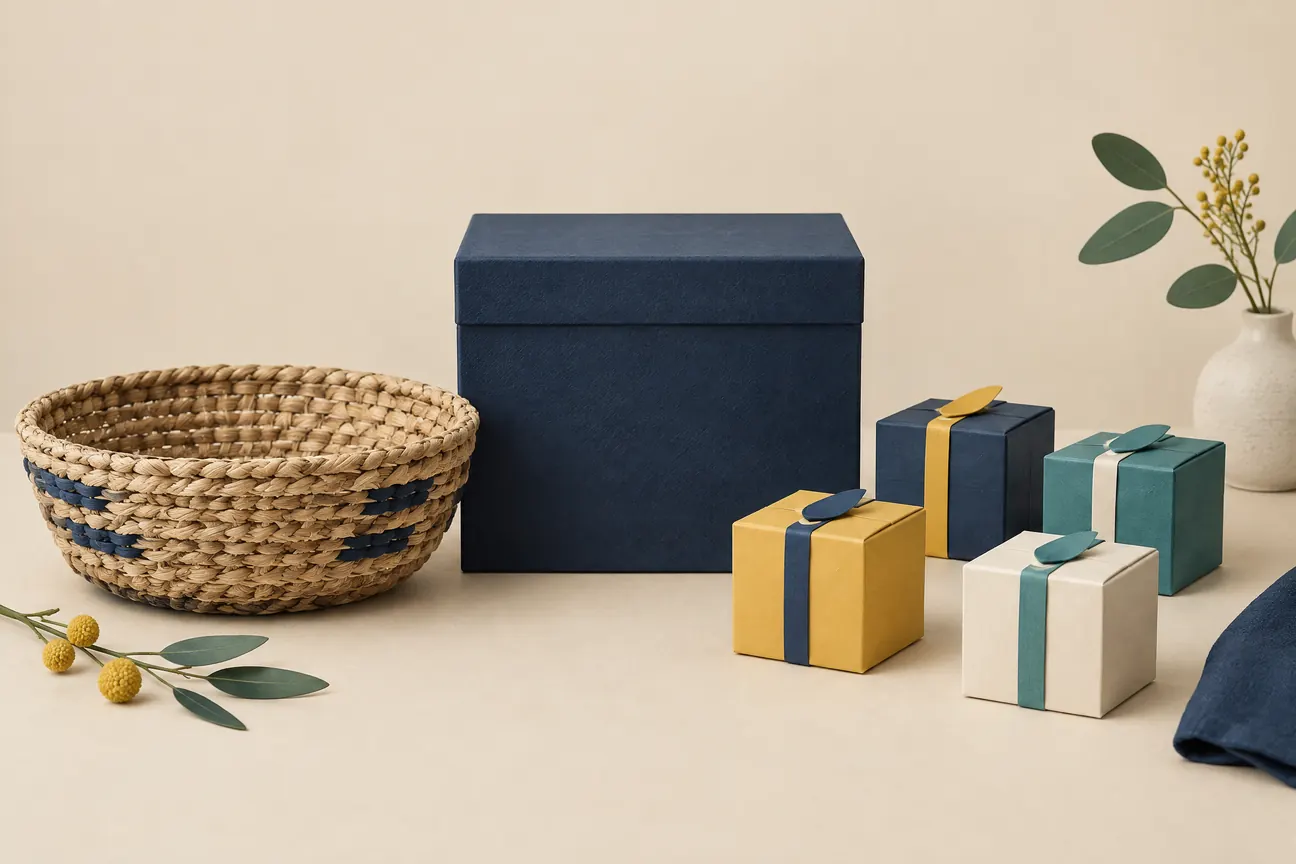
Choose a container only after deciding what belongs inside it. An open basket makes a display of the contents but may occupy a broad surface; a rigid box may be easier to put away but still needs its dimensions checked. Several small units can be convenient for sharing, although they introduce more pieces to unpack. Compare the packed footprint and the remaining container with the recipient's available space. Reuse is a possibility to discuss, not a reason to impose a basket they do not want.
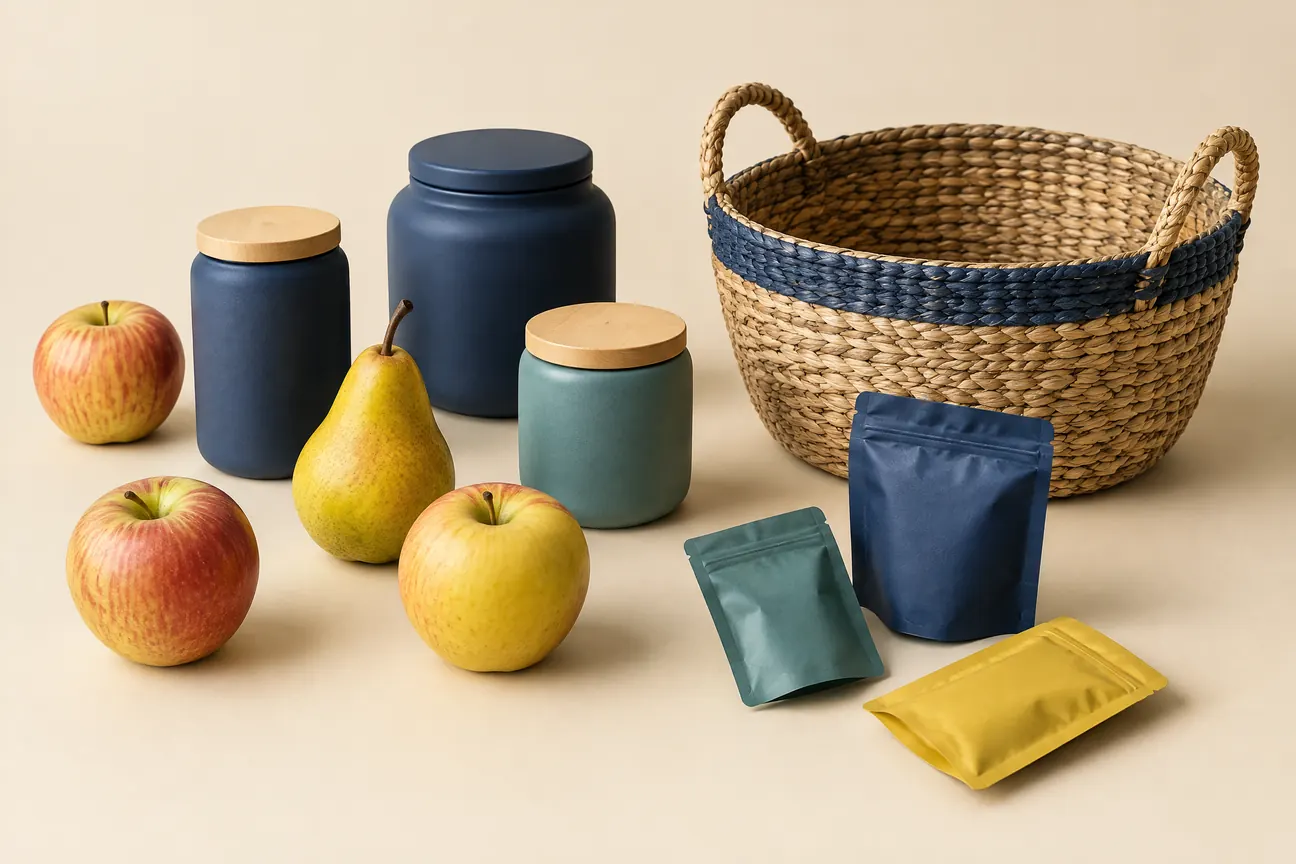
Decorative tissue and ribbon serve a different purpose from protective inserts and an outer carton. If the gift contains glass jars or fragile household pieces, ask how those items are separated and restrained during transport. Ask whether the attractive presentation is inside additional transport packaging, and how much the receiver will need to remove. Do not mistake a styled photograph for a packing demonstration or assume a fragile label guarantees intact contents. Practical packaging can be unobtrusive without being absent.
Consider what happens after opening. The recipient should be able to find food labels, identify anything needing particular storage and remove items without dismantling an elaborate display. If taking a gift yourself, choose something you can comfortably carry alongside your own belongings and ask about its packed weight. For delivered gifts, describe the access conditions to the merchant. Keeping the format manageable is often more considerate than adding height and decoration merely to make an entrance.

Plan the handover without turning the gift into a hosting duty
Agree who can receive the gift and where the handover should happen. In a residential building, distinguish the lobby from the flat door and ask whether a building desk can accept the proposed package; do not assume it provides storage. If any item has special storage requirements, arrange a receiver who can follow them. [1] Give the merchant accurate access details and request confirmation of the feasible delivery arrangement. Your preferred window is a request until it is accepted.
When bringing a gift to a gathering, tell the host whether it is intended for the household to keep. A simple note that there is no need to serve it that evening prevents uncertainty. This matters especially for a bottle that the adult recipient chose for later or a food gift with its own handling needs. Keep the message warm and specific to the new home, but leave instructions about access, substitutions and receiving contacts out of the greeting card.
Before paying, compare the merchant's final written proposal with your original purpose. Check the agreed contents, container dimensions, complete charges and what happens if the receiver becomes unavailable. Ask about the actual change or reporting process rather than relying on a general promise. If an important item cannot be confirmed, simplify the gift instead of filling the gap with an unrelated substitute. The best outcome is a gift the residents can use freely, without an obligation to display, share or consume it on your schedule.

| Format | Useful when | Main trade-off | Detail to establish |
|---|---|---|---|
| Requested homeware | A specific everyday need is known | It remains in the home and can duplicate existing pieces | Function, dimensions, material and care instructions |
| Compact edible box | Residents prefer small treats for private use | The assortment may not suit every resident | Pack quantities, ingredients, dates and storage |
| Shared food basket | The household wants food that can be divided | Display size does not establish enough usable portions | Individual units and anything needing preparation |
| Wine with accompaniments | The intended adult has explicitly welcomed wine | Bottle and food preferences both matter | Exact bottle, approved substitutions and food handling |
| Mixed housewarming selection | Residents want both a useful piece and consumables | More item types mean more unpacking and storage | Actual inclusions, total footprint and receiving readiness |
On a small screen, scroll the table sideways to compare.
Take it into everyday life
A practical checklist
- Decide whether the gift is for the residents to keep or for guests to share.
- Ask whether they prefer a consumable gift or a specific household item.
- Include wine only after the intended adult recipient says it is welcome.
- Obtain the proposed contents, pack quantities and any bottle identification before approval.
- Check food labels, relevant ingredient restrictions, date marks and storage instructions item by item.
- Confirm homeware and packed-container dimensions against available space.
- State which substitutions require your approval and confirm the complete charges.
- Agree a real receiver, handover location and fallback if the receiving plan changes.
Questions & answers
Is a hamper better than a household item for a small flat?
Neither is automatically better. A requested compact item can be useful, while a large edible basket can still take up considerable space. Compare the packed dimensions, what remains after opening and whether the residents will actually use the contents. If their needs are unknown, offer a choice rather than guessing.
How can I ask about wine without spoiling the surprise?
Ask whether they would prefer an alcohol-free gift or would welcome wine, then leave the final presentation as the surprise. If they welcome wine, ask about styles they already enjoy. Do not infer consent from their age, a past toast or the fact that they host parties.
What if one resident enjoys wine and another does not?
Check that the household is comfortable receiving it and make clear who the intended recipient is. Do not assume a mixed food-and-wine gift suits both people. A shared alcohol-free selection may be simpler; if wine remains part of the gift, nobody should be expected to open or drink it.
Should I choose a larger basket when several friends contribute?
Not unless the residents want the larger quantity or container. Pooling a budget can instead support a specific requested item or a smaller selection of favourites. Agree one item list among contributors and check for duplicate gifts before ordering.
Can I assume all food in a hamper has the same storage needs?
No. Check each item's date marking and any special storage or use instructions. The Centre for Food Safety's labelling guidance treats these as product-level information, not a universal hamper rule. [1] If a chilled item is proposed, arrange suitable receiving and storage rather than treating the whole basket as a cupboard gift.
What if the page lacks specific set details?
A home-gift topic page is a starting point, not confirmation of a specific set. Ask the merchant for a written proposal with actual inclusions, item dimensions, relevant material and care information, and confirmed charges before approving anything. Keep the shortlist provisional until those details are clear. [5]
Do I need to deliver the gift on moving day?
No. Ask when the residents will have time and space to receive it. A later handover can be more useful than adding a bulky package to an unsettled home. If an order is already in progress, request a change and wait for the merchant's confirmation rather than assuming it has been rescheduled.
Should the host serve my gift at the housewarming party?
Only if that was agreed. Tell them when the gift is for their household to keep, and avoid planning the party around an unconfirmed delivery. A card saying there is no need to open it that evening leaves them free to enjoy the contents later.
Sources & further context
Numbered references follow the source order below. Merchant pages provide context for their own products or services; independent sources support relevant general reading, not merchant quality or medical suitability.