
Baby gifts for new parents start with the household
Before looking at ribbons or colour themes, send a small, answerable message: would something for the baby, something for the adults, or a present later be most welcome? This is easier to respond to than a request for an entire shopping list. Leave room for a polite refusal, too. A household may already have bought its essentials, received several gifts, or decided not to host visitors. The aim is to offer a choice without asking the parents to manage your enthusiasm. If they name one useful item, there is no need to add several unknown extras to make it look more impressive.
Think beyond the named recipient on the card. A gift might be unpacked by a partner, shared with a grandparent staying over, or put away by another caregiver. Ask who will actually use it and where it will go. Public Health Scotland describes understanding and practical help from people around new parents as valuable, including everyday help such as making dinner. [1] That supports a simple alternative to a decorative bundle: offer a particular errand or an agreed food drop-off, if welcome. It does not mean a gift can replace personal support or healthcare.
Use the Baby gift basket page as a browsing starting point once the family has given you a direction, rather than treating a ready-made combination as a complete list of newborn needs. [2] For a colleague, a compact present with a collective card may suit the relationship better than personal care products. For a close relative, an explicitly requested item can feel thoughtful even without an elaborate container. The right distinction is not generous versus plain; it is welcome and usable versus something the household must find space for.
Match baby items to choices the parents have already made
If the parents want something for the baby, ask about an actual product rather than a broad category. For clothing, check the size label they want, the season when it will be worn, and whether they prefer a particular opening or fastening style. Do not automatically buy a larger size on the assumption that future use is always better; it may suit the wrong season. For nappies, ask for the preferred brand and size instead of buying a large speculative supply. Hong Kong's Family Health Service includes clothing and nappies among newborn preparations and notes that shoes are not necessary. [3] Decorative booties need not be mistaken for an essential purchase.
A plush toy, a blanket and a sleep accessory should not be treated as interchangeable ways to make a cot look welcoming. Family Health Service advises that babies do not need pillows and that fluffy comforters, heavy blankets and stuffed toys should not be placed in an infant's crib. [3] If the family wants a keepsake toy, describe it as a keepsake and leave its use to the parents; do not propose putting it beside a sleeping baby. For equipment intended for sleeping, carrying or travelling, follow the parents' specific choice rather than adding an unrequested item because it fits the hamper theme.
Bath products and feeding supplies also deserve a pause when the family's preferences are unknown. Ask for the exact item they already use or have chosen, or leave the category out. A label such as organic or gentle is not a reason for this article to endorse an infant product. Keeping original packaging and instructions allows the parents to inspect what they receive. If a substitution would change the product or size they requested, ask again rather than assuming that a similar-looking alternative will do.
Turn a hamper photograph into item-by-item decisions
A styled image tells you about presentation, but it cannot answer whether the family needs the contents. Make a short inventory with a purpose beside each item: requested baby clothing, an adult snack, or a keepsake the parents have said they want. Then compare that inventory with what is already bought and what other gift-givers have promised. A duplicate is not automatically a mistake; an extra cloth may be welcome. The important point is whether the parents want another one, not whether the category is generally described as useful.
When comparing Baby gift hampers, ask the merchant for an itemised proposed contents list rather than relying on a tier name or the apparent fullness of a photograph. The collection presents baby items and parent treats as gifting directions. [5] Check which parts of the particular order are for whom, what sizes are included, and whether the unwanted item can be omitted. Customisation is an enquiry, not an assumption that every change is available. If the requested combination cannot be supplied, choosing a smaller suitable gift is preferable to approving extras merely to preserve a package format.
For a pooled workplace gift, appoint one organiser and ask the parents one consolidated question. Let contributors agree their budget privately, with the total also covering the container and any confirmed delivery charge. The organiser can then present two suitable choices instead of forwarding a stream of suggestions. Before approval, keep one final version of the contents and card wording. If an item changes later, judge that change against the parents' request, not the group's desire to finish quickly. This keeps collective generosity from becoming a stack of separate parcels and repeated messages.
Keep adult food treats separate from baby supplies
A treat for the adults can be a good fit when they have enough baby belongings, but ask who will eat it and what they avoid. A parent may prefer savoury snacks over sweets, or the household may not want food at all. Check food allergies separately from taste preferences. The Centre for Food Safety advises reading allergen information on food labels and avoiding the relevant ingredients; it also explains that a very low level of an allergenic substance can cause a reaction in a susceptible person. [4] Do not describe a hamper as suitable for everyone simply because its contents look familiar.
Preserve the original ingredient labels, date information and storage instructions rather than transferring treats into attractive unmarked jars. If the merchant cannot provide enough information for the recipient to judge a food item, leave it out. Make clear in your message that the edible portion is intended for the adults, not the newborn. Keep those items separate from the baby supplies when discussing the order so that the household can identify them easily. This is a recipient-planning choice, not infant feeding advice, and neither a fruit basket nor a celebration snack is a treatment.
Consider the work a food gift creates after arrival. A generous quantity may require sorting, sharing or storage at a time when the household does not want another task. Offer a modest amount they actually want and ask whether there is space for anything requiring refrigeration. If you bring an agreed meal yourself, make the drop-off arrangement specific and follow the food's storage directions. Avoid attaching claims about milk supply, recovery or special nourishment to a tea or snack. The adults can choose their own food without the present carrying an unsolicited health message.
Give a full-moon celebration its own recipient list
Before ordering anything for a full-moon occasion, establish the direction of the gift. Are you sending a present to the new household, or helping the parents arrange thank-you boxes to give other people? The same occasion can involve both, but they have different decisions behind them. An incoming present should suit the parents' wishes; an outgoing box needs an agreed recipient and distribution plan. Do not turn your gesture of congratulations into an expectation that the family must host a gathering, send something back, or follow a particular celebration format.
For Full moon gift sets, explain the intended use in your enquiry, because the collection links newborn and full-moon gifting directions without settling the details of your order. [5] If it is a present for one family, discuss a single suitable composition. If it is an outgoing thank-you order, ask whether individual units are available and confirm what each contains. A phrase associated with the occasion does not establish a fixed menu, a universal custom, or a promise that the merchant supplies every format you have in mind.
For outgoing gifts, count by the unit the parents want to recognise: an individual, a household or a workplace sharing group. Two relatives living together might receive one household box if that is the family's choice; a team parcel is a separate decision rather than one box per colleague by default. Confirm the celebration date with the parents before printing anything, and ask whether they want the baby's name included. An uncomplicated card without a name or date may be better while plans are unsettled. The family's privacy and chosen level of celebration matter more than making every package identical.
Choose packaging that fits the home, not only the photograph
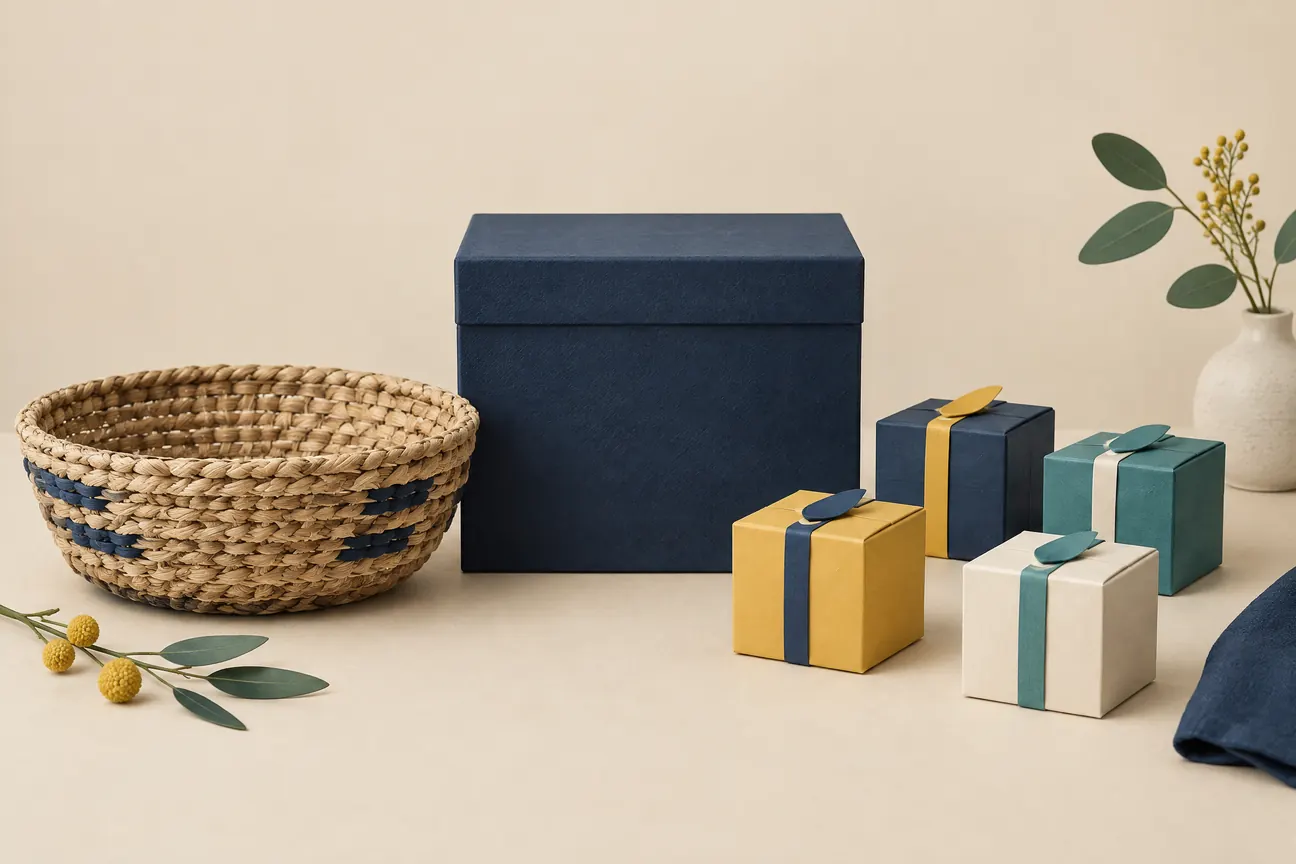
Ask whether the family wants a reusable basket or keepsake box before making the container a large part of the gift. A container is useful only if they have a use and a place for it. For a compact flat, request the packed dimensions rather than judging scale from a picture. A low box that can be emptied and put away may suit the household better than a tall display. Equally, a keepsake box may be welcome when the parents have specifically asked for somewhere to collect cards. There is no need to insist that every celebration deserves a permanent object.
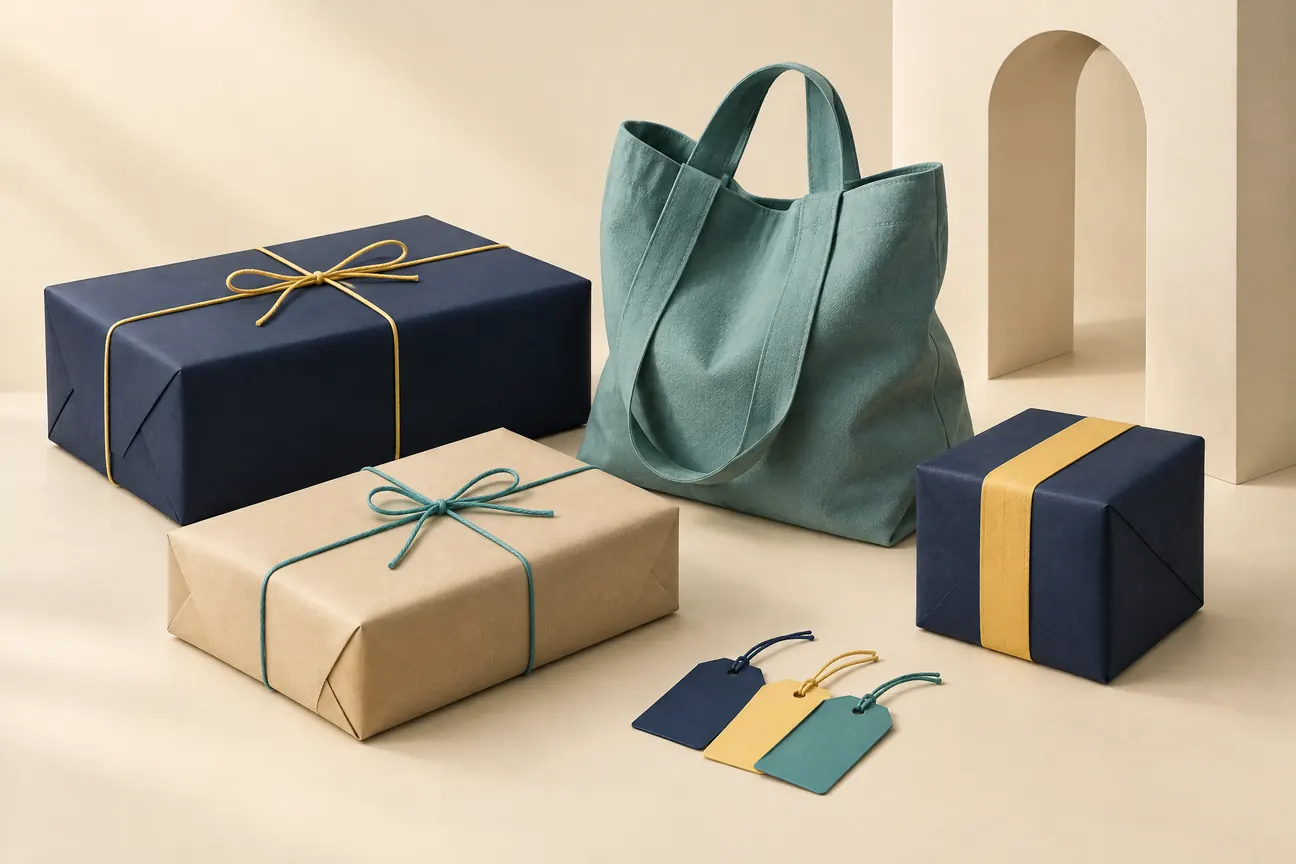
Keep access to the contents straightforward. Removable wrapping lets the recipient inspect the items without dismantling an elaborate arrangement, while intact product packaging retains the information they may need. Ask whether the card can sit on top rather than be buried beneath decorative layers. If you are assembling a present yourself, prioritise a tidy, manageable parcel over extra filler. Do not suggest using the gift basket as a baby sleep space, or turning its decorations into infant accessories. The packaging's job is to carry and present the gift, not to become unrequested baby equipment.
Personalisation should also have a clear purpose. Check the spelling the parents approve and whether they want the name displayed outside the parcel. A group greeting can name the senders without announcing personal birth details. Where the family prefers privacy, a plain outer package and a discreet card are reasonable choices. Ask about any cost or change restrictions before approving customised wording; do not assume it can be revised later. A simple congratulations message, with no request for a photograph or immediate reply, keeps the gesture warm without adding another obligation.

Arrange a handover without creating a visit obligation
Use the address and receiving arrangement the parents approve, not an address copied from an old message. A home delivery may need to go to a partner or another agreed adult who can answer the door. Ask whether a lobby handover is convenient before proposing one, and do not assume building staff will accept or store the parcel. Give the merchant only the contact details the recipient has agreed to share. Confirm the offered delivery arrangement for the actual order, including any charges and what happens if the named receiver is unavailable; a page mentioning delivery is not an accepted booking.
Keep delivery and visiting as separate permissions. A parent agreeing to receive a gift has not necessarily agreed to entertain you. Offer a short handover without a visit, and let them suggest company if they want it. If the family is still at a maternity facility, ask them and the facility about the actual receiving rules before sending anything there. Waiting until they are home can avoid adding a parcel to their journey, provided that suits them. The arrival of a baby does not create a deadline by which your present must be delivered.
Finish with a message that makes the arrangement easy to understand: what is coming, who will receive it, and whether anything needs prompt storage according to its label. If plans change, pause rather than dispatching to an unconfirmed destination. A later agreed gift is still a celebration. Once it has arrived, resist asking for an unboxing video or proof that every item is being used. Let the family open it in their own time. The most considerate basket is one they can receive, understand and put away without having to organise the giver as well.
| Gift direction | A reason to choose it | What to ask first | Main trade-off |
|---|---|---|---|
| Requested baby item | The parents have named something they want | Exact product, size and whether another giver has bought it | Less surprise, but fewer unwanted extras |
| Adult treat parcel | The household prefers something to share | Who will eat it, allergies, labels and storage space | Avoids baby-item duplicates but may create food-storage work |
| Mixed newborn hamper | Parents welcome both a baby item and an adult extra | An itemised contents list and possible omissions | A coordinated presentation can include unnecessary filler |
| Small keepsake gift | Parents want an object to remember the occasion | Desired object, storage space and personalisation permission | Lasting sentiment comes with a permanent footprint |
| Outgoing full-moon boxes | Parents have chosen to send thank-you gifts | Recipient units, contents, date and distribution plan | A separate batch order needs more coordination than one present |
On a small screen, scroll the table sideways to compare.
Take it into everyday life
A practical checklist
- Ask whether the household wants a baby item, adult treat, practical help or a present later.
- Check the exact requested products and sizes against items already owned or promised.
- Leave unrequested infant sleep equipment, feeding supplies and toiletries out of the order.
- Obtain a final itemised contents list and agree how proposed substitutions will be handled.
- For adult food, check recipient preferences and allergies, and keep original labels and instructions.
- Separate an incoming full-moon present from any outgoing thank-you order and count the intended gift units.
- Confirm packed dimensions, container preference and approved card wording without unnecessary personal details.
- Agree the receiver, address, handover arrangement and actual charges without assuming a visit is welcome.
Questions & answers
How can I ask about preferences without spoiling the surprise?
Offer two or three broad choices, such as a requested baby item, a treat for the adults or a present later. Let the parents choose the direction, then keep the card or wrapping as the surprise. Do not ask them to build a long wish list for you.
Should I buy newborn clothes or a larger size?
Ask which size and clothing style the parents want, and consider the season when they expect to use it. A larger size is not automatically more useful. Check whether the same item is already bought or promised, and keep its original product information.
Is a plush toy a suitable extra for a newborn basket?
Only include one if the parents want it, without presenting it as a cot accessory. Hong Kong Family Health Service advises against placing stuffed toys, pillows, fluffy comforters and heavy blankets in an infant crib. [3] A keepsake description is not a safety endorsement for a particular toy.
What if the parents say they already have everything?
Take that answer seriously. Ask once whether an adult treat or a particular errand would be welcome, or send a card and offer to celebrate later. Do not turn their refusal into a challenge to find an even larger or more unusual gift.
Can I put snacks for the parents in the same hamper as baby clothes?
Discuss them as separate parts of the gift and make clear that the snacks are for adults. Ask about allergies and preferences, keep the original ingredient and storage information, and omit foods the recipients cannot confidently assess. CFS advises reading food allergen information on labels. [4]
Does a full-moon gift mean one thank-you box per person?
No quantity should be inferred from the occasion name. Ask whether this is an incoming present or an outgoing thank-you order. For outgoing gifts, let the parents decide whether the unit is an individual, household or sharing group, then confirm the available format with the merchant.
How should a team organise a colleague's baby gift?
Use one organiser, one private budget discussion and one consolidated preference question to the parents. Choose from a small number of suitable options and approve a single contents list. A collective card can convey everyone's congratulations without separate deliveries or requests for personal birth details.
Should I send the basket to the maternity ward or wait until the family is home?
Ask the parents first. If a facility delivery is preferred, verify its current receiving rules and the agreed receiver before dispatch. Waiting until the family is home may avoid another parcel to carry, but it still needs an approved address and handover time. Receiving a gift does not imply an invitation to visit.
Sources & further context
Numbered references follow the source order below. Merchant pages provide context for their own products or services; independent sources support relevant general reading, not merchant quality or medical suitability.