
Give your first online flower order a clear purpose
Start with the sentence you would say while handing over the flowers. A thank-you for a colleague's help needs a different tone from a private anniversary gesture, even if both recipients like pink. Decide whether the flowers should be a quiet acknowledgement or the main feature of a celebration. This gives you a way to reject unsuitable designs instead of browsing until the largest photograph feels like the safest choice.
The relationship also affects the receiving experience. A friend who enjoys a public birthday moment may welcome an office handover; someone who keeps personal life private may prefer flowers at home. Do not treat a larger arrangement as a stronger expression of care. A smaller gift that leaves a work surface usable can be more considerate. If you do not know whether flowers would be welcome at all, a discreet question to the recipient is more useful than guessing from occasion labels.
Once the purpose is clear, the Hong Kong florist enquiry page offers a place to discuss a proposed gift rather than a reason to assume any displayed design is available. Its references are subject to request-specific confirmation. [3] Explain the relationship and intended tone in plain language: for example, a modest thank-you for a colleague, not a romantic statement. Ask what choices fit that brief before becoming attached to one catalogue image.
Turn personal preferences into useful flower choices
Describe what you know about the person, not what an occasion supposedly requires. A preference for soft colours can become a main colour with one optional accent. Someone who likes uncluttered interiors might enjoy a simple outline rather than many contrasting textures. If a photograph helps, say which feature matters: the colour balance, loose shape or restrained wrapping. One annotated reference is easier to interpret than several unrelated pictures accompanied by 'something like these'.
Distinguish a preference from an exclusion. A favourite colour leaves room for discussion; a flower the recipient dislikes should be named clearly. If strong floral scent bothers them, ask for the proposed stem names and a less fragrant option rather than assuming pale flowers have little scent. Also decide whether you want fresh cut flowers or a dried or preserved-style piece. These are different display choices, not interchangeable substitutes. Ask how the particular materials should be cared for without relying on a generic longevity label.
A cat in the household is a material detail, not an afterthought. The FDA advises keeping true lilies and daylilies out of cat-owning homes because the plant, pollen and vase water can be dangerous to cats. [2] Put that exclusion in the brief and ask that it also apply to substitutions. A high shelf is not a substitute for excluding these lilies. Obtain the full proposed flower and foliage list; absence of lilies alone does not establish that the whole arrangement is pet-safe.
Measure the place where the flowers will actually live
Choose a likely display surface before deciding on size. A bedside ledge, shared dining table and reception counter create different limits. Measure the available width and depth, then leave room for ordinary use: a lamp switch, plates or the opening of a cupboard. Give those limits to the florist in centimetres. Ask for the approximate finished height and widest span, including foliage and wrapping, since a compact container can still support a broad arrangement.
Check the view from where the recipient sits. Flowers on a dining table should not force people to lean around them to talk, while a desk arrangement should leave the screen visible. A narrow shelf needs a container that fits fully on the surface, not only an arrangement that looks narrow from the front. A photograph of the empty surface can help explain the constraint. Crop out personal documents and other identifying details; the florist needs spatial information, not a tour of the home.
The available spot should also suit cut-flower care. The RHS recommends a cooler position away from heat and keeping arrangements away from ripe fruit. [1] A sunny window beside a fruit bowl may therefore be a poor default, however attractive it looks in a photograph. If the room has few suitable surfaces, reduce the scale or reconsider the format instead of filling the only usable corner. Ask whether the suggested stems have particular placement needs before choosing the final position.
Choose a format that does not give the recipient extra work
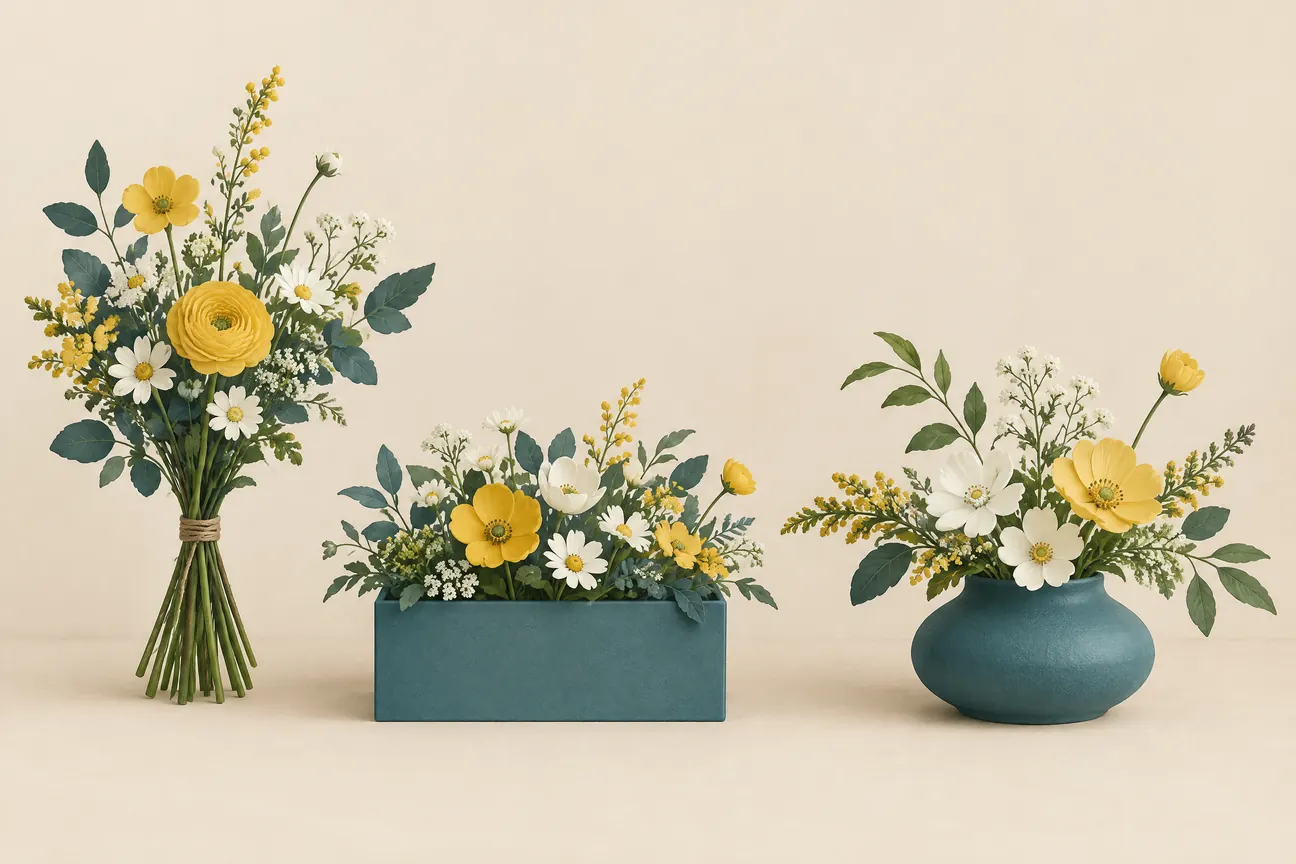
Think through the first ten minutes after the gift arrives. A wrapped bunch may require the recipient to find a vase, remove packaging and arrange stems. An arrangement supplied in a vessel avoids the vase hunt, but the recipient still needs to know how to maintain it. A flower box has a different shape and may use a different support medium. Ask what is inside the chosen format and what the recipient must do; do not assume every box is self-watering or every pictured vase is included.
When comparing flower bouquets, look at the intended handling as well as the outline. The linked page presents bouquet references for enquiry, with current flowers and preparation details to be confirmed. [4] A hand-tied gift can work well for someone who enjoys arranging flowers and owns a suitable vase. For a busy recipient without one, ask whether a vessel can be supplied and request dimensions. The deciding feature may be ease of placing the gift, not the number of stems.
Fresh flowers also involve ongoing attention. The RHS advises clean vases, removing foliage below the waterline, clean stem cuts and regular water checks and changes. [1] If the recipient is about to travel, delivery after their return may be preferable to a larger bunch before departure. For someone who likes a display but does not want cut-flower care, discuss a non-fresh option separately and request its own care instructions. Neither format should come with an assumed lifespan or a promise of no maintenance.
Separate the presentation from the flowers themselves
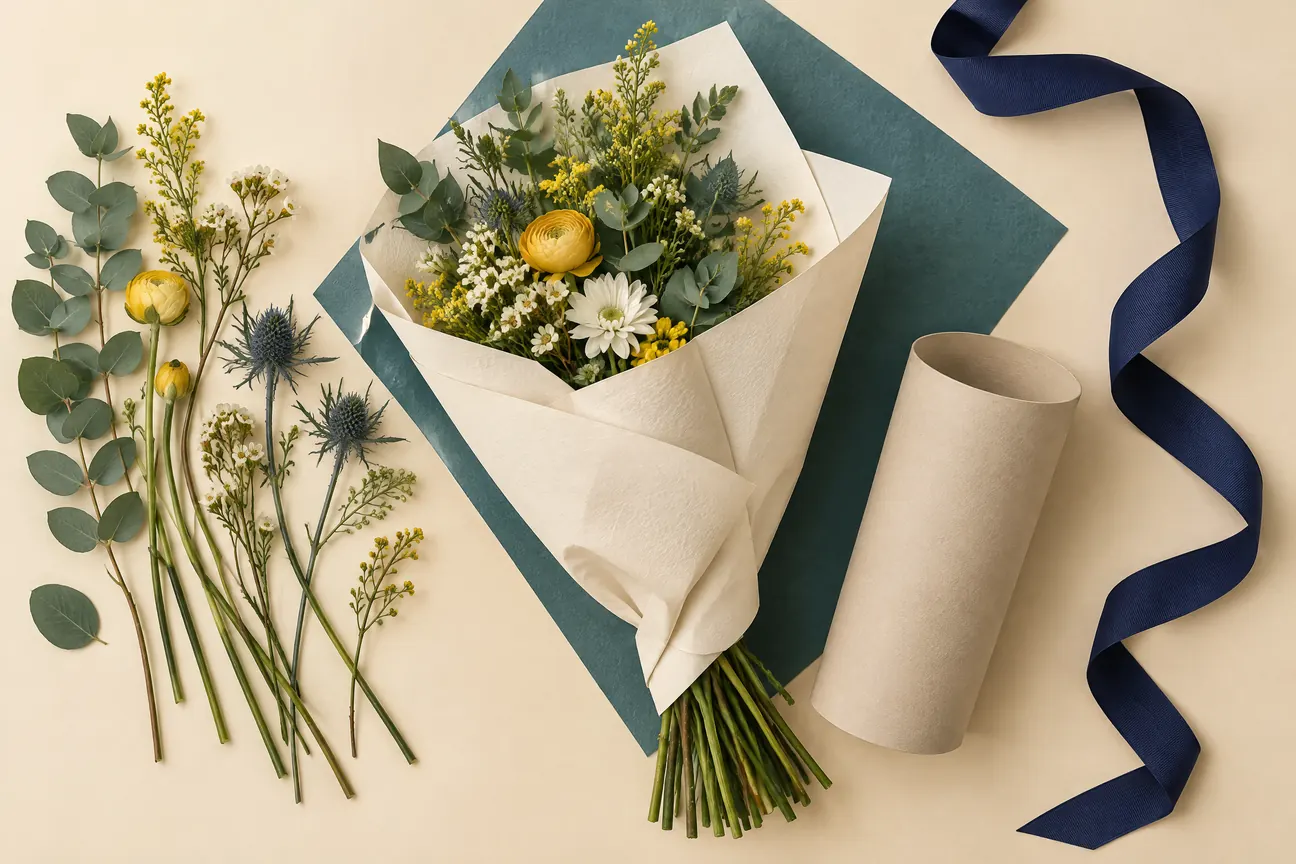
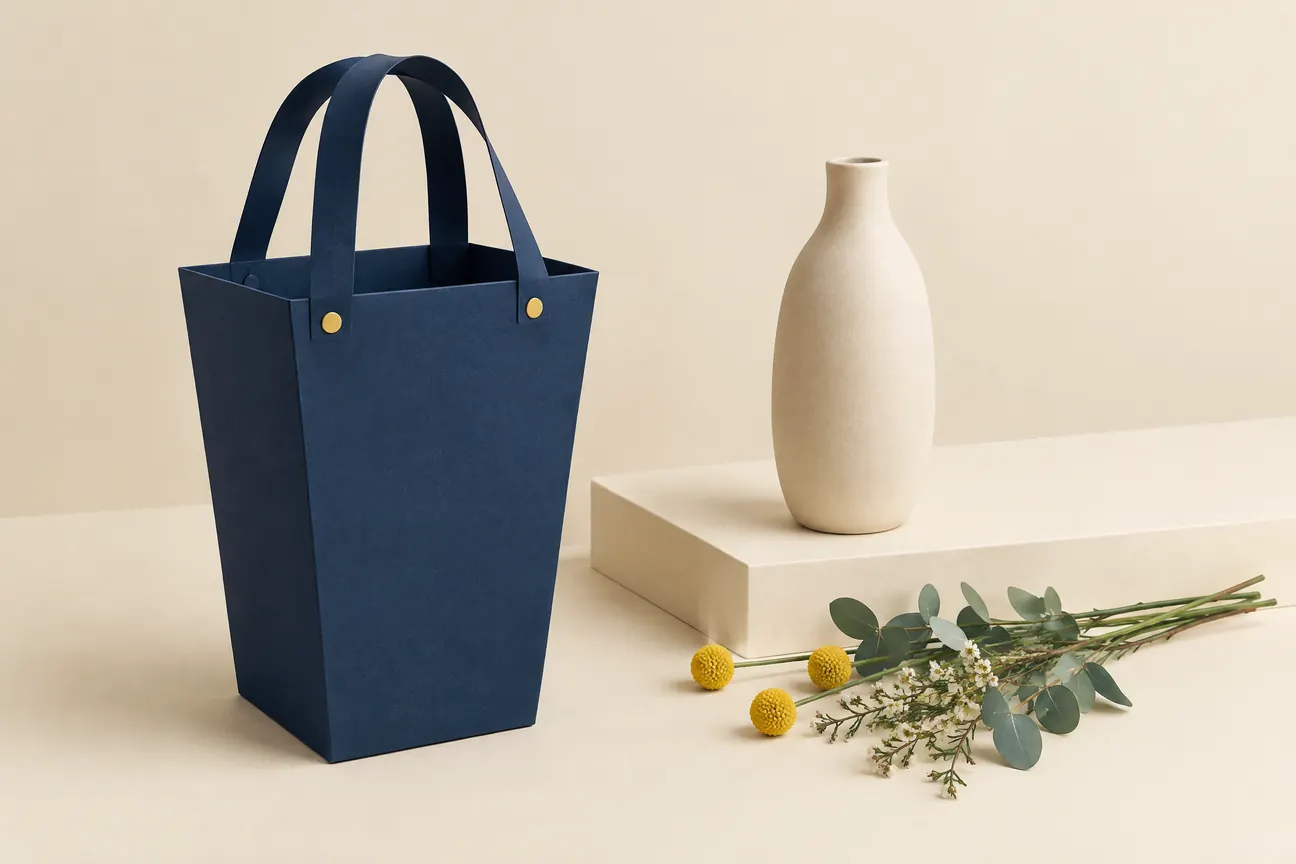
Wrapping can dominate a catalogue photograph. Decide whether you want an impressive handover package or a restrained presentation that takes up less space. Ask for the flower portion's approximate dimensions separately from the outer wrap, and clarify whether a carrying support is included. A recipient taking the gift home after work may value a manageable shape more than extra layers of paper. If a particular ribbon or wrapper matters, name it as a preference and ask what alternatives are available.
The card should make the gift understandable without making it more public than intended. Write the final wording yourself and identify the sender clearly, especially for a group gift. Use the recipient's preferred language rather than automatically adding a second language. Check names, punctuation and line breaks in the submitted text. A delivery instruction such as 'leave with reception' belongs in the order notes, not on the greeting card. Ask about the available card space before writing a long message.
Set a total spending ceiling that includes any vessel, packaging extras and delivery charges, rather than only a flower allowance. Then decide what should be protected if the proposal exceeds that ceiling. You might keep the preferred colour and reduce the size, or retain the supplied vase and accept a simpler wrap. Request an itemised current quote so those choices are visible. Do not infer that a richer-looking photograph includes every accessory, or treat a reference price as the confirmed total for your request.
Plan the recipient's day, not just a delivery date
A date alone does not explain who will receive the gift. Picture where the recipient will be and what happens next. Someone receiving flowers at work may have meetings all afternoon and a crowded journey home. A home delivery may be easier if they are available, while an office arrangement should suit both the desk and any later carrying. Ask the recipient or a trusted contact which destination is workable. Keep the design surprising if you wish, but avoid making availability a guessing game.
Provide the exact building or estate name, block or tower, floor, unit and recipient contact needed for the chosen destination. For an office, add the company name if reception uses it to locate staff. Ask the building or recipient whether reception can accept flowers and whether any access conditions apply. These are destination-specific questions, not rules to assume across Hong Kong. Send only necessary contact details to the merchant, and use order notes rather than a publicly visible message card for logistics.
Agree what should happen if the first handover cannot take place. A named colleague may be an acceptable alternative, but an unattended lobby may not be. Ask which arrangements are actually available and whether a changed destination or further attempt affects the order terms. If the occasion depends on flowers being present before a meal or meeting, describe that deadline explicitly. A preferred window is a request until accepted; choose a different plan if the florist cannot confirm one that works.
Send a short brief and agree what can change
Bring the decisions together in one readable message. An illustrative brief might say: 'A personal birthday gift for a friend who prefers soft yellow; a small arrangement for a narrow dining table; a vase is needed. Please propose the finished dimensions and stem list within my total budget. The household has a cat, so no true lilies or daylilies, including substitutions. I will supply the address and exact card text separately.' This states priorities without pretending to prescribe a florist's design.
Before you order flowers online, use the ordering enquiry page to settle the proposed arrangement and the current terms for your particular request. [5] Agree whether a reference image defines an overall style or whether a named flower is essential. Put exclusions ahead of aesthetic flexibility, and ask to approve any material change that affects those exclusions, the format or the total. If a favourite stem is unavailable, choose between an agreed alternative and postponing rather than leaving that decision implicit.
Keep the accepted version of the brief alongside the merchant's written reply. Check that the vessel, approximate scale, card wording, receiving plan and total all refer to the same proposal. Ask for care information appropriate to the supplied materials, not just a generic bouquet instruction. The aim is not to control every petal. It is to give the florist creative room within a few clear limits, so the finished gift suits the person who receives it and the space they will use.
| Format to discuss | When it may fit | Recipient's practical task | Question before choosing |
|---|---|---|---|
| Wrapped cut-flower bouquet | The recipient owns a vase and enjoys arranging stems | Unwrap and place in a suitable vase | What is the flower span without the outer wrapping? |
| Cut flowers supplied in a vase | No suitable vase is available at the destination | Choose a surface and follow water-care instructions | Is this vessel included, and what are its base dimensions? |
| Low table arrangement | Flowers will share a table with meals or conversation | Leave serving space and maintain the specified support medium | What is the finished height and how is water care handled? |
| Flower box | The recipient prefers a defined, compact presentation | Follow instructions for the actual materials and support inside | What support medium is used, and is the box intended for display? |
| Dried or preserved-style piece | The recipient specifically prefers a non-fresh display | Follow material-specific placement and care instructions | Which materials are included and what conditions should be avoided? |
On a small screen, scroll the table sideways to compare.
Take it into everyday life
A practical checklist
- Describe the occasion and relationship in one sentence, including whether a public handover would be welcome.
- Choose a main colour or visual mood, and separate optional preferences from flower exclusions.
- For a cat-owning home, exclude true lilies and daylilies, including substitutions, and request the full materials list. [2]
- Measure the display surface and request approximate finished height, width and depth, including foliage.
- Check whether a vase or container is included and what the recipient must do on arrival.
- Set a total spending ceiling and ask for a current quote identifying delivery and optional extras.
- Supply exact card text separately from the destination, contact details and alternative receiver instructions.
- Keep written acceptance of the design priorities, substitution limits, receiving plan and order-specific terms.
Questions & answers
Can I buy flowers without knowing the recipient's favourite variety?
Yes. A known colour preference, a suitable scale and a clear purpose can be more useful than guessing a variety. Give the florist one visual direction and identify anything the recipient dislikes. Ask for proposed stems before accepting the design, particularly where household restrictions apply.
What should I do if I cannot measure the recipient's room?
Identify a likely surface and describe what else needs to remain on it. Ask for the proposed finished dimensions rather than choosing by a size label. If space is uncertain, discuss a modest format with a clearly specified base; avoid a wide statement arrangement simply because it looks impressive online.
Does a bouquet photograph mean the vase is included?
No. Ask whether the quoted format includes the photographed vessel, wrapping and any carrying support. If a vase is needed, check its base size and height as well as the flower dimensions. A reference image should not replace a written list of inclusions.
How can I keep a delivery surprising without risking a missed handover?
Check the recipient's availability without revealing the design, or ask a trusted contact about a workable destination. Agree an alternative named receiver with the merchant. If the receiving plan remains uncertain, an arranged personal handover may be more considerate than an unexpected delivery.
What substitution instructions are useful?
Say what may vary and what must stay fixed. You might allow a different accent flower while retaining the main colour, size and format. Flower exclusions should apply to every replacement. Ask how material changes will be approved and whether they affect the total before accepting the order.
Is putting lilies out of reach enough in a home with a cat?
The FDA recommends not bringing true lilies or daylilies into a cat-owning home; pollen and vase water are also hazardous. [2] Exclude them rather than relying on a high surface. If lily exposure is suspected, contact a veterinarian immediately. A lily-free arrangement still needs its other materials assessed separately.
What if the recipient is leaving Hong Kong shortly after the occasion?
Consider moving the gift to their return date, or ask whether they would prefer a different kind of gesture. Fresh cut flowers require water care, so increasing the size does not solve the absence. A non-fresh arrangement is an option only if the recipient wants it and has suitable display space.
Where should a recipient put fresh cut flowers after arrival?
Choose a suitable cooler spot away from heat and ripe fruit, as the RHS advises. Use a clean vase where the format requires one, remove submerged foliage and follow the supplied instructions for water care. [1] Check material-specific needs rather than assuming every arrangement should be handled like loose cut stems.
Sources & further context
Numbered references follow the source order below. Merchant pages provide context for their own products or services; independent sources support relevant general reading, not merchant quality or medical suitability.
- [1] Royal Horticultural Society — Cut flowers: cutting and conditioning
- [2] U.S. Food and Drug Administration — Lovely Lilies and Curious Cats: A Dangerous Combination
- [3] Y. Florist / YumYum — Hong Kong florist enquiry page
- [4] Y. Florist / YumYum — Flower Bouquets
- [5] Y. Florist / YumYum — Online flower ordering enquiry page