
Prince Edward & Kwun Tong clinics · Home-visit enquiries elsewhere

TCM Lab

TCM Lab · Hair choices & preparation / Wigs and appearance

Men’s hair systems: daily commitments are as important as appearance

Content updated

A convincing fitting is only the first test. Compare how you will clean, remove, maintain and pay for a hairpiece before deciding whether it belongs in your everyday routine.

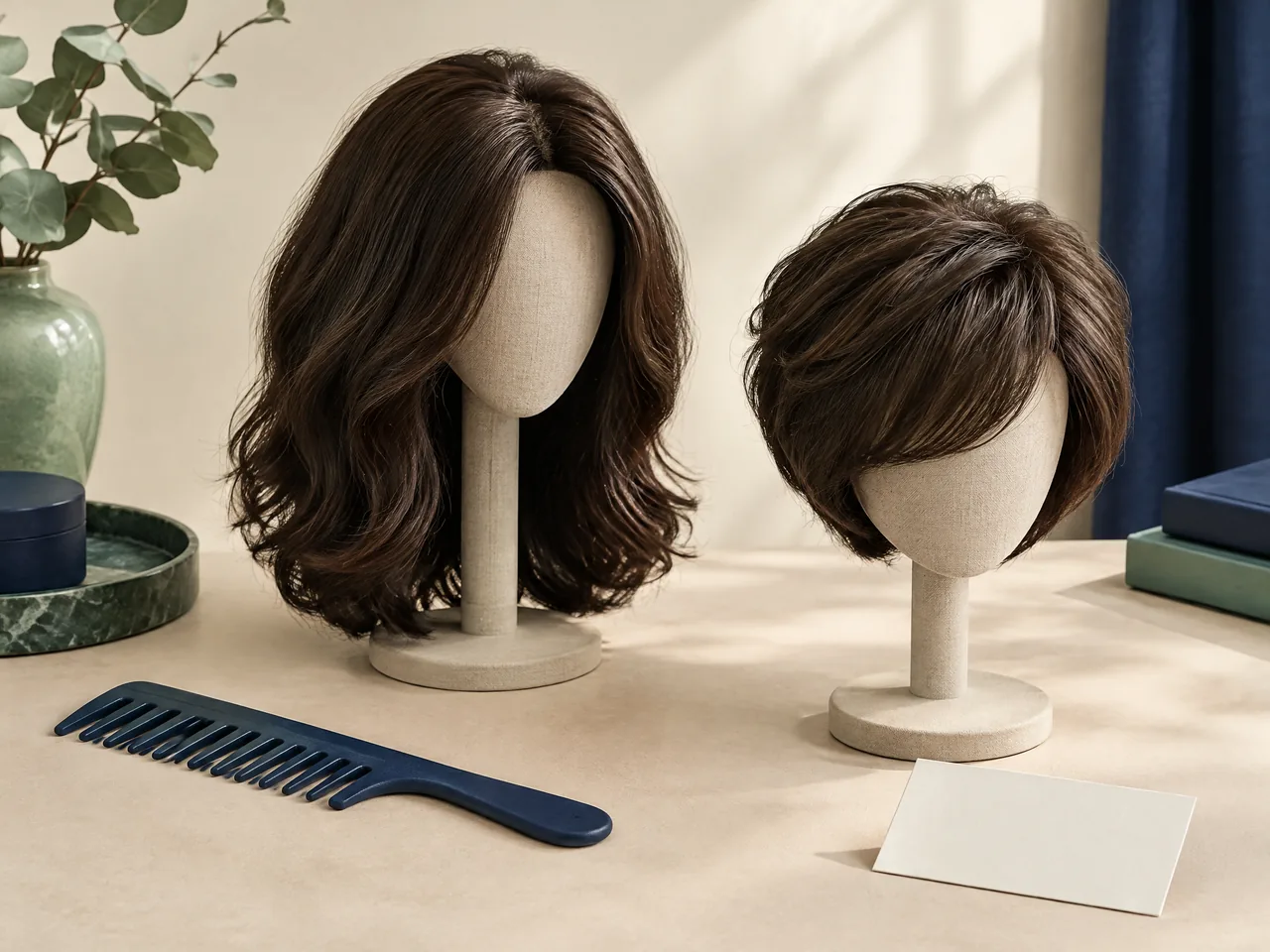
Illustrative wig and hairpiece selection objects
AI-generated illustrative concept; not a DT Hub location, product photograph or case record.

The short answer

Choose coverage and attachment separately. A men's hair system supplies external hair for appearance; integration blends added hair with hair you already have. Neither grows follicles. A transplant is surgery that moves your own hair and requires a separate medical assessment. For a system, ask for a hands-on care demonstration, an individual maintenance plan and a current itemised quote before committing.

DT Hub is an external website under the same ownership as TCM Lab, with salon and Academy, hair assessment and Chinese medicine hair-growth information, and wig sections. Salon services and scalp spas concern styling and beauty care; Academy concerns skills learning. Chinese medicine and medical options require individual assessment and do not guarantee hair growth; wigs are appearance products, not treatment. Business sources support service information, not evidence of medical effectiveness.

Start with coverage, not the product name

If you are looking for a toupee hong kong, first mark the area you actually want covered: the temples, the crown or most of the scalp. A toupee usually means a partial hairpiece, whereas a full wig provides broader coverage. Names alone do not tell you how either attaches or comes off. Bring front, side and crown photographs showing your normal haircut. Ask to see where the proposed base would sit and how its edges meet your remaining hair, rather than choosing from a head-on promotional image.

When comparing a men's wig hong kong option with a smaller piece, check the whole haircut, including your sideburns and the back. A partial piece depends on a believable blend with surrounding hair; a full wig changes more of the overall outline. Neither is automatically more discreet or more comfortable. Try the coverage you need, then sit, turn your head and put your glasses back on. The American Cancer Society distinguishes full wigs from toppers and recommends checking fit and purchase-return terms, useful questions even outside its cancer-care context.[4]

Choose an attachment you can manage on a difficult day

A men's hair system hong kong enquiry should include more than a preferred hairstyle. DT Hub describes clips, tape, adhesive and other attachment approaches on its service page.[1] Ask which is proposed for your particular unit, whether any existing hair must be shaved, and whether removal is something you will do yourself. A removable piece involves repeated positioning and storage; a longer-wear bonded piece involves planned removal, scalp access and reattachment. Avoid treating either as a maintenance-free choice. Request a demonstration of the actual method, not just a finished look.

For hair replacement hong kong, compare the routine against a week containing overtime, exercise and a late flight. Can you still manage the cleaning, and can you reach the provider if an edge lifts before a meeting? Ask which tasks require an appointment and what you should do if you cannot attend on schedule. Get instructions for loosening, removal and product use in writing. A sensible plan includes what not to attempt at home. Do not assume that pulling off a bonded base or adding an unfamiliar adhesive is an acceptable quick repair.

Integration makes your existing hair part of the plan

For a hair integration hong kong consultation, ask exactly how added hair will blend with, and attach to, the hair you already have. DT Hub describes weaving, knotting or bonding methods, but that description does not establish which is suitable for you.[2] Have the fitter show the proposed attachment points and explain how you will wash your scalp beneath the piece. Ask how the arrangement changes as your own hair grows, and whether fragile areas would carry any load. Integration is cosmetic addition, not follicle regeneration or a diagnosis of thinning.

Where a method pulls on existing hair, comfort is a safety question rather than a bonus. The American Academy of Dermatology warns that repeated pulling from weaves or extensions can cause traction alopecia, meaning hair loss caused by tension. Pain or a headache during fitting can indicate excessive tightness.[5] That advice concerns pulling on hair; it does not establish the safety of every bonded scalp system. Ask for tension to be addressed rather than accepting pain as a settling-in period. Persistent irritation or concern about hair loss deserves clinical advice, not simply another styling adjustment.

A transplant changes the medical decision, not just the hairstyle

When reading a hair system vs hair transplant comparison, separate supplied hair from surgically moved hair. A system can change appearance when it is fitted, although ordering and adjustments may take time. A transplant moves hair from a donor area into a thin or bald area; it is not suitable for every type of hair loss. NHS guidance also notes that surrounding hair can continue to thin after surgery.[3] A fitting consultation can explain a hairpiece, but a medical professional must assess transplant candidacy, donor supply, risks and the longer-term plan.

Surgery is not an instant substitute for grooming or follow-up. NHS guidance says some people need one to two weeks away from work and must protect the grafts carefully during the early recovery period. Visible results develop over months, and the procedure can leave scars; bleeding, infection and an unsatisfactory result are among the risks discussed.[3] Ask the surgeon how work, exercise, headwear and any existing hairpiece affect your individual recovery instructions. Do not put a wig or adhesive over a recently treated area without that team's permission. A system and surgery should never be compared solely by their first payment.

Test a frontal hairline in motion and ordinary light

If your priority is a receding hairline cover, specify how you wear your fringe. A forward fringe and a swept-back style expose different parts of the front edge. Ask to inspect both the hairline and the junction with your own hair near a window, then from the side. Bring a photograph of the density you want rather than asking for the fullest possible piece. A more ambitious frontal outline may also mean a different coverage area, attachment arrangement and styling routine. Decide on those commitments together, not after the piece is ordered.

Use the fitting to rehearse ordinary interactions: looking down at a laptop, turning towards someone beside you, and putting on your usual glasses. If you wear a helmet or headset, mention it before fitting and ask how to assess compatibility without unsafe pressure. No short indoor try-on establishes performance through a sweaty commute or a swim. Ask for the unit's specific activity instructions and any restrictions. Judge whether you can maintain the chosen look yourself; a style that needs more daily work than you want is not a practical improvement.

Rehearse cleaning and drying before paying

Ask the fitter to demonstrate detangling, washing, drying and storage for the exact fibre and base you are considering. Then explain the steps back in your own words. Human hair and synthetic fibre have different care demands, and a natural-looking photograph tells you nothing about heat tolerance. The American Cancer Society advises wig-specific care products and avoiding dryers or heated styling tools unless the wig is heat resistant.[4] Do not translate 'human hair' into permission for unrestricted colouring, bleaching or high heat: request the manufacturer's limits for that particular processed hair and construction.

For a removable piece, decide where it can dry and be stored without being crushed; the American Cancer Society suggests a wig stand for short-term storage.[4] For a bonded unit, ask how scalp cleaning fits into the removal schedule rather than borrowing washing instructions for a loose wig. Keep fibre care separate from scalp comfort: a clean-looking hairstyle does not settle a skin complaint. Ask who to contact if discomfort develops, how removal can be arranged safely, and whether a different attachment or a pause in wear should be considered. Do not accept a universal lifespan or fixed servicing interval.

Budget for upkeep and the journey to Kwun Tong

A wig price hong kong search is useful only if the quote describes the same coverage, fibre, base and attachment you tried. Ask for separate costs for the piece, fitting, cut-in, supplies, routine servicing and possible repairs. Check whether adjustments are included and what happens if the fit is unacceptable. The meaningful comparison is initial spending plus expected upkeep and replacement, with assumptions written down. Published examples are not a personalised quotation or a promise about stock. Ask for current terms, including the deposit, cancellation policy and any limits on returns after customisation.

DT Hub's listed wig-service location is Room 03, 21/F, Lee Bo Times Centre, 50 Hoi Yuen Road, Kwun Tong, Kowloon.[1] Plan for repeat visits there if your chosen attachment needs professional care; enquiries from another district do not imply a branch nearby. Confirm appointment availability and allow travel time before committing. Keep the service roles clear: haircut and colour work change styling, scalp spa is beauty care, and a wig changes appearance. Questions about the cause or treatment of hair loss, including any traditional Chinese medicine option, require a separate clinical assessment. Leave the fitting with a usable care plan, not an obligation to buy.

Take it into everyday life

A practical checklist

  • Bring front, side and crown photographs, plus one realistic reference for your desired haircut.
  • Write down your exercise, headwear, travel and morning-styling routine before the fitting.
  • Ask which area is covered, how the piece attaches, and whether shaving or hair-based attachment is proposed.
  • Request a hands-on removal and care demonstration, with product and heat limits for the exact unit.
  • Record the individual servicing plan and what to do if an edge lifts or the scalp becomes uncomfortable.
  • Obtain an itemised current quote and written adjustment, deposit and return terms.
  • Confirm the Kwun Tong appointment and the travel needed for future servicing; use a separate medical consultation for diagnosis or surgery.

Questions & answers

Is a men's hair system a treatment for hair loss?

No. It supplies external hair to alter appearance and coverage. Integration also adds hair rather than growing follicles. You can consider an appearance product while seeking clinical advice, but a fitting does not determine why hair is thinning or replace an individual treatment assessment.

Can I remove every hair system each night?

Not necessarily. The base and attachment determine the removal method. Ask whether the proposed piece is intended for daily removal or longer wear, who performs removal, and what products and steps are required. Do not pull off a bonded piece or improvise a solvent.

Does integration protect the hair I already have?

That cannot be assumed. Ask how the added hair is supported and whether your own hair carries tension. AAD guidance warns that repeated pulling from weaves or extensions can cause hair loss. Pain or headache during fitting should prompt loosening, not a wait-and-see promise.[5]

Can I swim or exercise without worrying about attachment?

No fitting can promise universal security through every activity. Explain your sport, water exposure and headwear before choosing a unit. Request its specific activity restrictions, cleaning instructions and response to lifting. Do not substitute a stronger adhesive without advice about that product and attachment.

Is a transplant a one-off permanent answer?

It is surgery, not a guaranteed end to future thinning. NHS guidance notes that hair around the transplanted area may continue to thin, and graft failure or noticeable scarring can occur. Ask a medical professional about candidacy, recovery and future planning rather than relying on a commercial appearance comparison.[3]

Should I choose human hair because it looks easier to style?

Compare the work as well as the look. American Cancer Society guidance says human-hair wigs generally require more maintenance than synthetic wigs. Heat tools should only be used where the wig is heat resistant. Ask for instructions for the exact unit, including any colour-treatment restrictions.[4]

What should I ask before paying a custom-order deposit?

Confirm the coverage, base, fibre, attachment, included adjustments and full quoted scope. Obtain the current production estimate and written cancellation and return conditions. Ask how a fitting problem will be handled after customisation, and include future servicing and travel in your budget.

Sources & further context

Numbered references follow the source order below. Business websites provide relevant service or product information, not evidence of medical effectiveness.

  1. [1] DT Hub — Men's Hair Replacement System
  2. [2] DT Hub — Hair Integration System
  3. [3] NHS — Hair transplant
  4. [4] American Cancer Society — Wigs for Hair Loss
  5. [5] American Academy of Dermatology — How to prevent hair damage from a weave or extensions

Turn the fitting into a record you can check

Make a short coverage record after the fitting rather than relying on your memory of the finished hairstyle. Keep separate notes for the area you wanted covered, the base proposed, and the hair that will remain visible. Ask the fitter to confirm where the front and side edges should meet your own hair. The partial piece and full cap in the illustration are comparison objects, not the specifications of your order. Record any unresolved blend or coverage question before approving custom work.

Next, ask which fit details should be kept with that record: the unit reference, any measurements the fitter uses, and the adjustments agreed during the trial. With permission, save a photograph of the agreed position so that a later visit has a clear reference. Note whether your usual glasses and headwear were discussed or actually assessed. A measuring tape around a blank dome illustrates a fitting question; it is not a self-measuring protocol or evidence that a particular unit will fit.
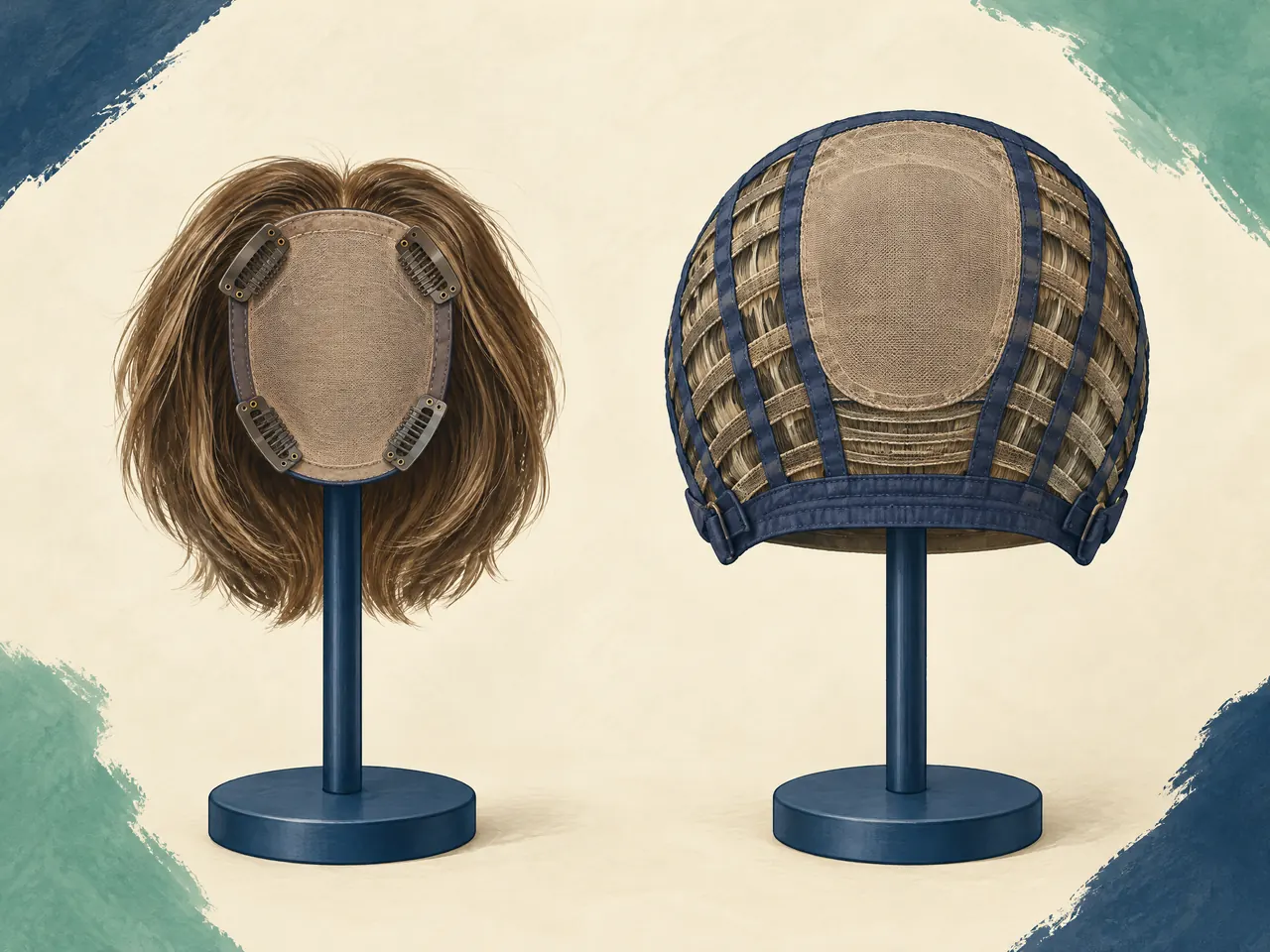

Illustration of a small removable topper and a full empty wig cap on separate plain stands, with their underside construction visible
Partial coverage and a full cap are separate choices to discuss. These generic objects do not depict a DT Hub product or a customer's fitting.Generated illustrative image
Illustration of a fabric measuring tape loosely surrounding a blank mannequin dome beside an empty fit-note card and a mirror
Keep the fitter's agreed fit details with the order record. This conceptual scene does not provide a measuring method or show an actual consultation.Generated illustrative image

Keep attachment instructions separate from fibre care

Ask for a handover with three clearly separated entries: tasks you have been shown how to do, tasks reserved for the provider, and questions still unanswered. Put removal and reattachment in that record rather than leaving them inside a general washing leaflet. If clips or a band are proposed, ask to see how they work on the actual piece. The illustrated clips and band do not demonstrate bonded removal or establish that your unit can be taken off each night.

Keep a second record for the fibre and base: the specification supplied with the order, the care instructions for that construction, and any limits on heat or colour work. Ask the fitter to match each recommended product or tool to its intended task, including whether it is for the fibre or for attachment removal. Anonymous fibre samples are a reminder to request written identification, not a way to identify material by appearance. Keep contradictory advice as an unanswered question until the supplier clarifies it.
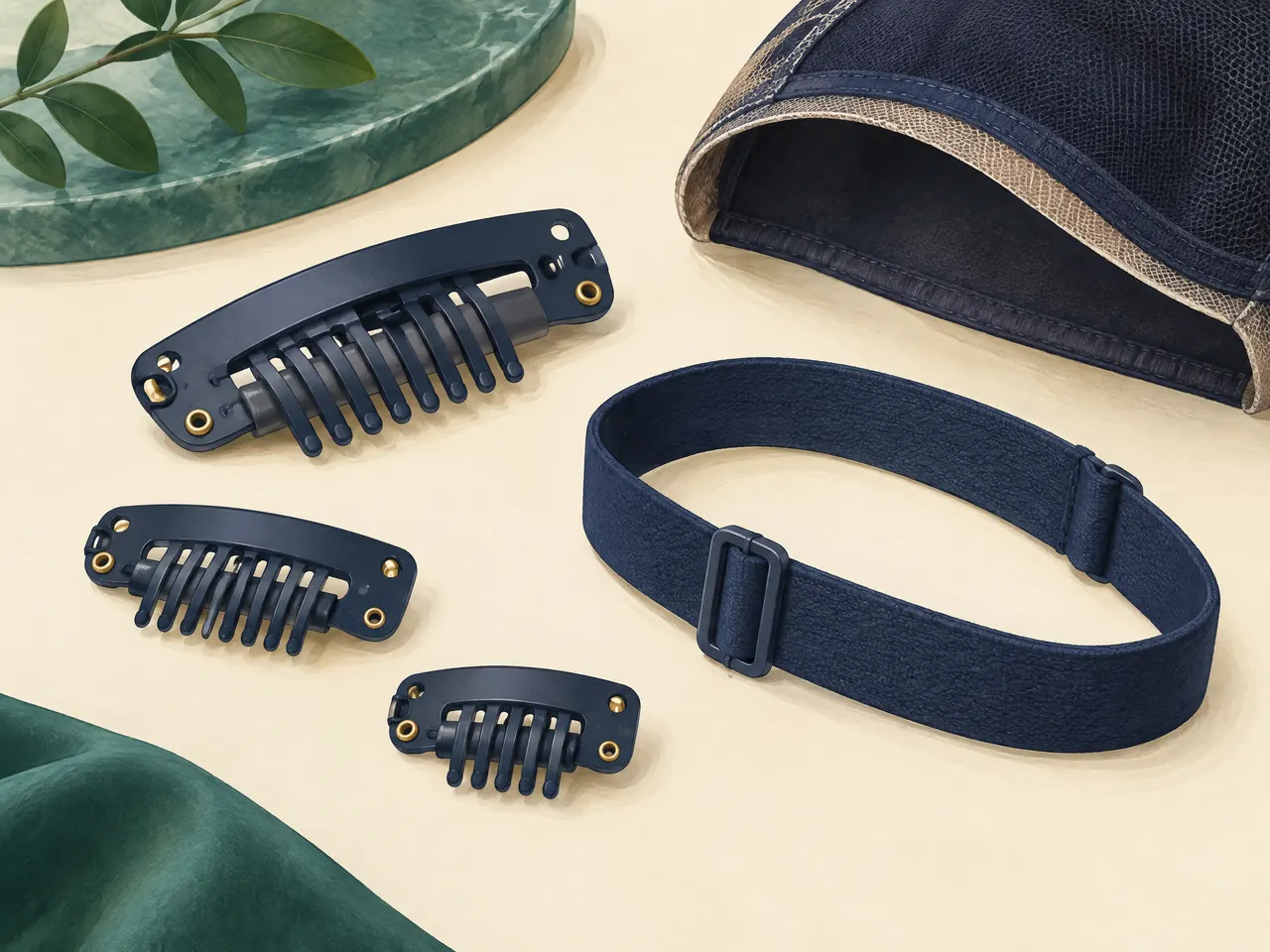
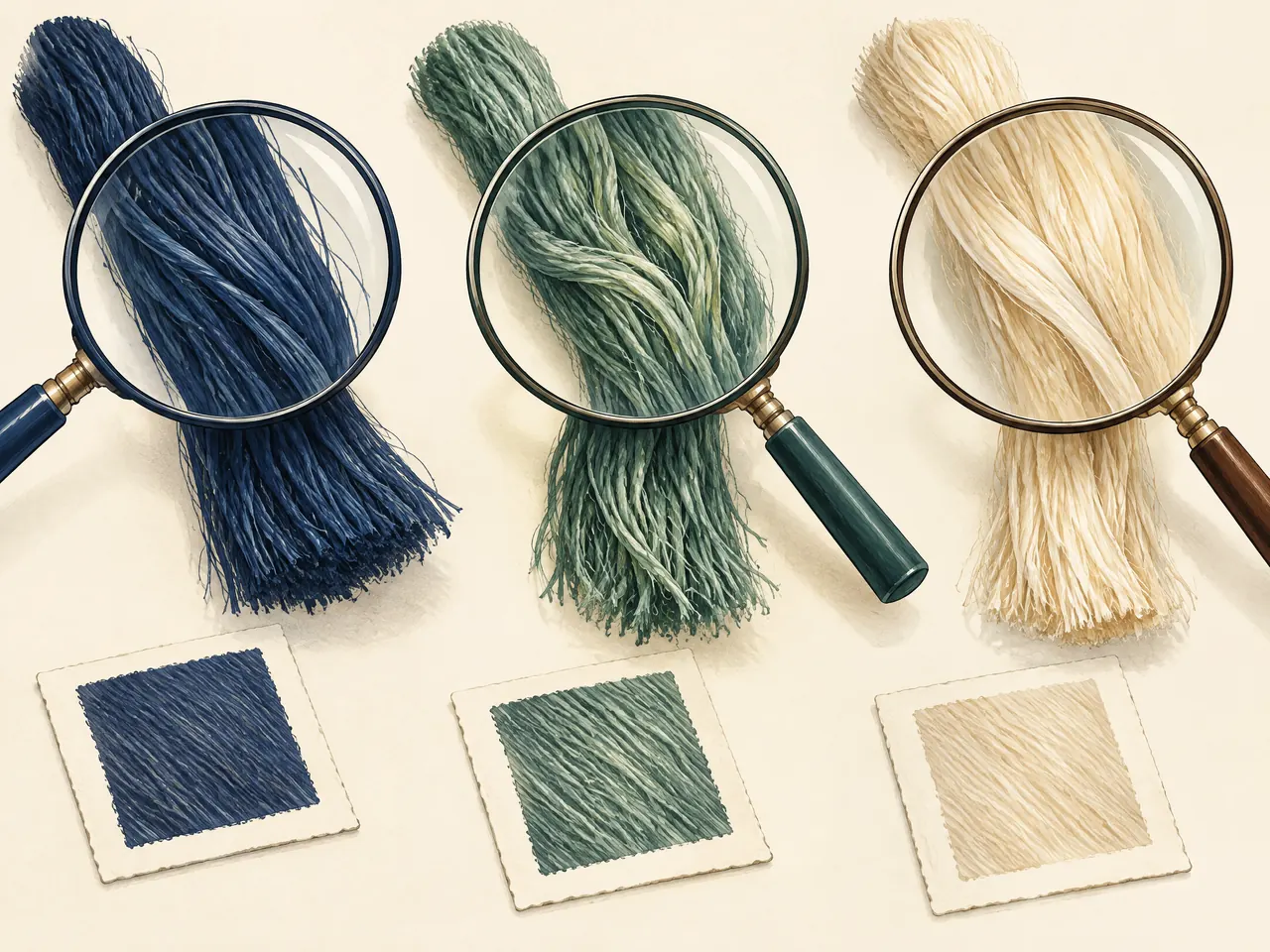
Illustration of generic hairpiece clips, a soft adjustable band and an empty sample cap edge arranged on a tabletop
Ask which attachment belongs to the piece you tried and who handles removal. These generic components are not instructions for adhesive use or a real fitting.Generated illustrative image
Illustration of three separate anonymous hair-like fibre bundles under a magnifying lens beside unlabelled material sample cards
Confirm fibre and base specifications from the order record, not from a sample's appearance. This is a conceptual material study, not product identification.Generated illustrative image

Plan the gap between wearing, washing and travelling

For a piece intended for home removal, work backwards from the next time you need to wear it. Ask the fitter to explain the approved drying support, when handling or brushing is allowed, and how to judge whether the piece is ready for storage or wear. Then check whether that sequence fits your evening and departure time. The illustrated stand makes the space question tangible; it does not establish that open-stand drying is suitable for every base or that every piece will dry overnight.

Before travelling, use the same care record to decide what you need to pack and what cannot be managed away from home. Ask how to protect the removable piece during transit and which approved supplies should accompany it. For a professionally serviced attachment, discuss a trip that overlaps a planned visit before leaving, and keep the agreed contact route with your instructions. A pouch and storage sleeve illustrate packing questions, not a repair kit; do not turn a missed appointment into an improvised adhesive or removal procedure.
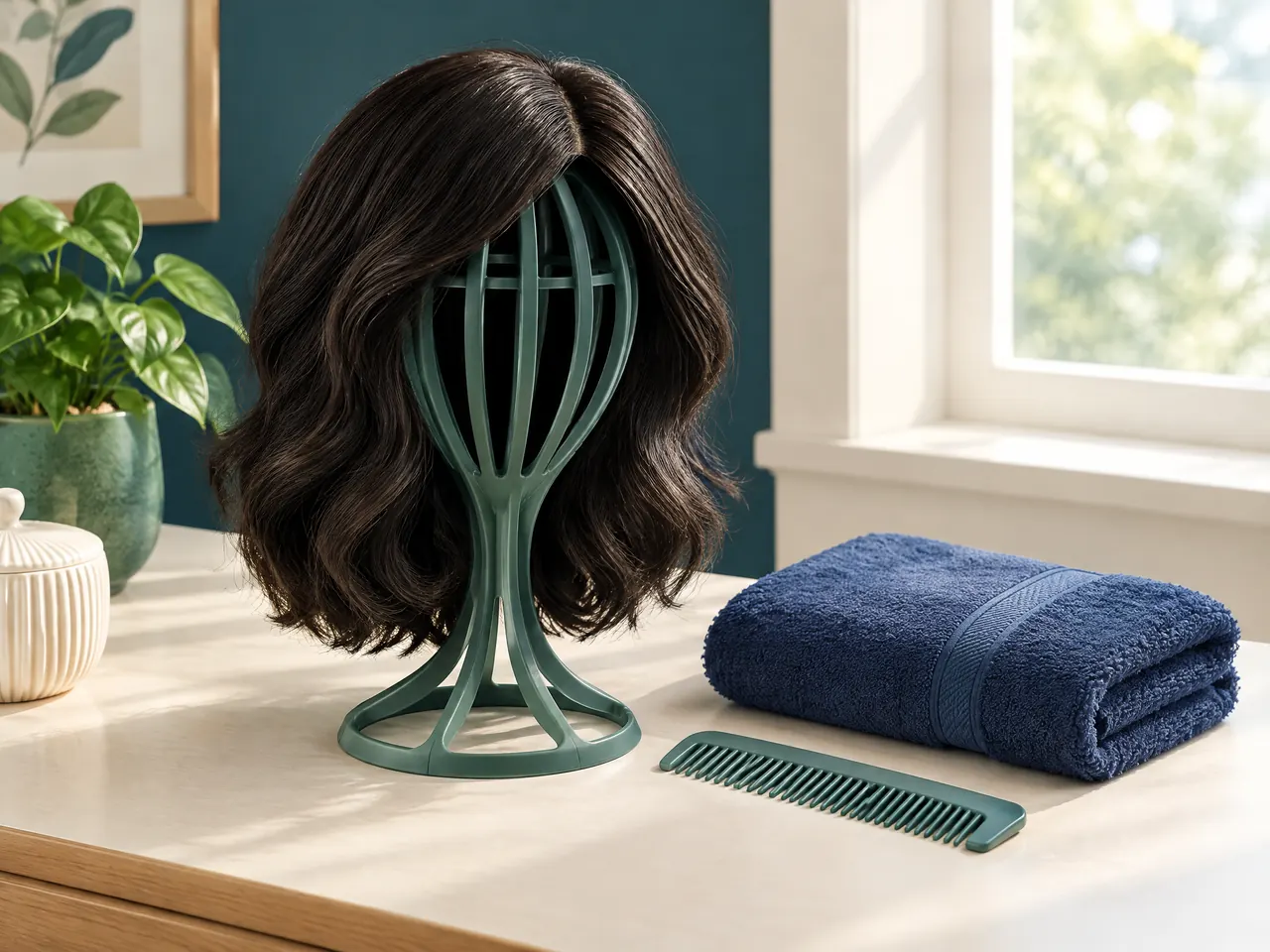
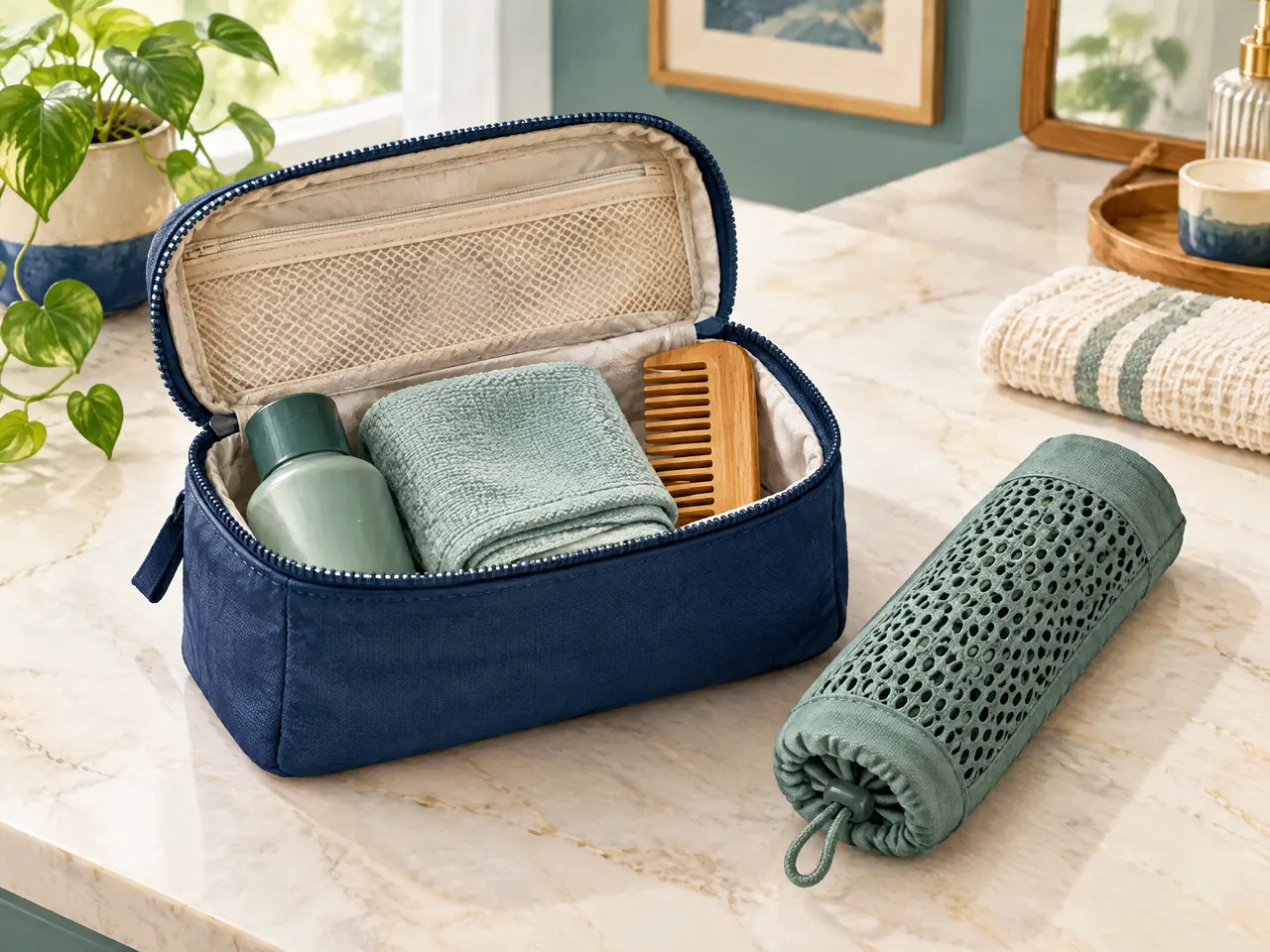
Illustration of an anonymous wig on an open ventilated stand beside a folded towel and an unbranded comb in indirect daylight
Confirm the drying support and handling sequence for your exact unit. This generic setup does not depict a DT Hub product or prescribe a universal method.Generated illustrative image
Illustration of an open unbranded travel pouch holding a capped bottle, folded cloth and comb beside a separate ventilated storage sleeve
Plan approved supplies and storage before a trip. These generic packing objects do not demonstrate attachment repair or represent supplied products.Generated illustrative image

Clinic enquiries

Contact and appointment arrangements

Clinics
Prince Edward and Kwun Tong
Opening hours
11:00–21:00
WhatsApp and telephone
+852 6940 5663

Appointments, practitioner availability and service arrangements are confirmed via WhatsApp.

Please mention any consultation language needs in your WhatsApp enquiry so that arrangements can be confirmed.

Enquire via WhatsApp
Food, gifts and floral lifeWhatsApp enquiry