
Prince Edward & Kwun Tong clinics · Home-visit enquiries elsewhere

TCM Lab

TCM Lab · Outdoor learning & coastal life / Courses and booking

NAUI entry training: understand feedback and assessment before enrolling

Content updated

Before choosing a NAUI beginner course, ask how the instructor will explain progress, check understanding and decide when you have met the programme requirements. A clear answer helps you plan for learning, not just attendance.

Illustrative scuba learning preparation objects
AI-generated illustrative concept; not an actual DiveHarbour class, student or dive-site record.

The short answer

Get the exact NAUI programme title and a written outline of its prerequisites, learning stages and assessment arrangements. Ask what feedback you receive, what happens when more practice is needed and which additional costs or booking terms apply. Do not use another agency’s session counts, exam rules or completion promises as NAUI requirements.

DiveHarbour is a separate diving school under the same ownership as TCM Lab. Diving courses and activities are separate from Chinese medicine care; reading this collection or visiting TCM Lab does not replace medical fitness-to-dive assessment or clearance.

Start with the exact programme, not a familiar label

Begin your enquiry by asking which NAUI programme you would enrol in and what certification it leads towards. NAUI’s learning overview lists supervised-diver and Open Water Scuba Diver pathways; these are not simply different names for the same outcome. Its Open Water Scuba Diver page describes an entry-level autonomous-diver course whose scope relates to environments, activities and equipment similar to training. Knowing that distinction gives your assessment questions a clear starting point. [1] [4]

Use the Hong Kong NAUI scuba diving course page to begin a programme-specific conversation. DiveHarbour describes knowledge development, confined-water practice and supervised open-water experience, with the sequence agreed before enrolment. Ask the provider to connect that description to the exact course title in your booking confirmation. Also ask which current prerequisites and age pathway apply to you, rather than relying on a short label or a friend’s earlier booking. [2]

Describe your background accurately: perhaps you have never used scuba equipment, have joined an introductory experience or have studied material elsewhere. NAUI’s official entry page says previous certification is not required; it also allows possible credit for its Introduction to Scuba credentials at the instructor’s discretion. That is not automatic credit for every try-dive or online lesson. Ask how any previous learning would be reviewed before assuming that a stage can be omitted. [1]

Separate learning feedback from the certification decision

For planning purposes, distinguish feedback from assessment. Feedback tells you what is developing well, what needs attention and what to focus on next. Assessment establishes whether the required learning has been demonstrated. A useful enrolment question is: ‘How will you tell me whether I am practising, being assessed or ready to progress?’ This is a way to clarify the course conversation, not a claim that NAUI uses those exact labels in every lesson.

The scuba certification course Hong Kong overview presents certification as assessed rather than an automatic purchase. Use it to ask who will teach and assess you, how progress is explained between stages and how unresolved learning points are recorded. A reassuring answer should explain the process without promising that payment or attendance alone will produce a card. Ask for clarification if ‘completion’ is used without saying what you must demonstrate. [3]

Keep three questions separate: what you need to learn, how the instructor will check it and what happens administratively afterwards. For example, finishing assigned reading does not answer whether your understanding has been checked, and a booked water session does not establish that every requirement is complete. Ask how the provider confirms outstanding items and when certification processing can begin. This prevents an administrative expectation from being mistaken for a learning result.

Ask how understanding is checked, not just how to access lessons

Ask which materials you receive, when you should use them and how questions reach the instructor. If digital study is part of your booking, find out whether there are preparatory tasks before an in-person session. Do not assume that another agency’s platform, quiz format or study sequence applies. The relevant question is how this NAUI programme connects study with instructor-led learning, and what you should do when an explanation still does not make sense.

Request the current knowledge-assessment arrangements directly. You might ask whether assessment is written or digital, which language is available, how results are discussed and what the process is if a topic needs further work. Obtain any pass criteria or reassessment conditions from the provider’s applicable programme information. Avoid preparing around an unofficial exam screenshot or a pass percentage remembered from someone else’s course; neither establishes the requirements for your own enrolment.

Prepare a short question log rather than trying to memorise isolated answers. Note the topic, what you think it means and the point you cannot explain confidently. Bring those notes to the agreed teaching session. For example, ‘I recognise this term but cannot explain why it matters’ gives the instructor more useful information than ‘I finished the chapter.’ This approach supports a discussion of understanding without turning your preparation into unsupervised practical training.

Make practical feedback specific enough to use

Before the practical stages, ask how demonstrations, supervised practice and debriefs are organised. DiveHarbour’s NAUI page describes briefing, demonstration, practice and a debrief, but your enquiry should establish how those elements fit the actual booking. Ask whether there is time to discuss your own progress and how the instructor identifies the next learning priority. Do not assume that a group format means everyone receives identical feedback or moves through each stage together. [2]

A helpful debrief question is: ‘What did you observe, what should I focus on next, and how will you check that improvement?’ You are asking for a clear learning target, not requesting an underwater technique from a blog. If a comment feels vague, such as ‘be more comfortable,’ ask what the instructor wants to observe during the next supervised practice. Let the instructor explain the relevant skill and assessment standard in the teaching setting.

Keep a brief learning note after each session: the feedback received, any unanswered question and the next agreed supervised activity. Distinguish the instructor’s observation from your own impression. Feeling more confident can be encouraging, but it does not itself establish that a requirement has been met. Equally, needing another explanation need not become a judgement about your ability to learn. Use the record to support the next conversation rather than to score yourself against classmates.

Clarify the pathway if you need more practice

Ask about incomplete learning before you pay, while you can still compare arrangements calmly. ‘What happens if I am not ready to progress on the planned day?’ should lead to an explanation of additional practice, reassessment and any programme or booking constraints. DiveHarbour’s certification overview recommends raising this question, but it does not establish a universal allowance of extra attempts. Obtain the terms that apply to your course rather than interpreting encouragement as an unlimited entitlement. [3]

Separate a missed session from a completed session in which further learning is needed. Illness, travel disruption, unsuitable conditions and an unresolved assessment item can lead to different arrangements. Ask whether extra tuition, equipment or transport could incur charges, and whether there are deadlines for completing outstanding requirements. DiveHarbour’s published statement says all fees are non-refundable and make-up sessions are subject to written terms; it does not promise a free replacement or your preferred date. [2]

Avoid making certification by a particular holiday departure your only acceptable outcome. Tell the provider about that date, then ask whether the proposed plan leaves realistic room for learning and possible changes. If you are joining with a partner or friend, discuss what happens if one person progresses differently. Shared enrolment can be enjoyable, but individual assessment means you should not plan around a promise that everyone will finish together.

Compare agency routes without borrowing their rules

When comparing NAUI with PADI or SSI, keep the questions consistent but allow the answers to differ. Ask each provider about the exact programme, prerequisites, study format, practical learning and assessment arrangements. Similar entry-level aims do not make every session count, age category, knowledge test or administrative process interchangeable. DiveHarbour’s certification overview itself includes an SSI-specific example; those figures should not be copied into a NAUI learning plan. [3]

Consider a simple comparison error: a friend says their course included a fixed number of sessions, so you expect the same number to determine your progress. Instead, ask which requirements apply to your programme and what the proposed teaching plan includes. Distinguish the planned schedule from the evidence needed for certification. Neither the longest advertised timetable nor the shortest one tells you, by itself, how clearly feedback is delivered or how your learning will be checked.

Compare the specificity of replies rather than trying to declare one agency universally easier or stricter. Does the reply identify the programme and assessment process? Does it explain how questions and extra practice are handled? Are unresolved arrangements acknowledged? Those answers help you choose a workable learning experience. If previous training is relevant, ask the receiving instructor to confirm any recognition or credit; do not assume that one agency’s completed lesson automatically satisfies another’s requirement.

Send an enquiry that makes the teaching plan easier to clarify

Give the provider enough practical context to answer usefully. State your previous training, water confidence, preferred teaching language and genuine availability. Mention whether your dates are flexible and whether you are enrolling alongside someone else. Ask what you should prepare before the first session and which equipment arrangements need confirmation. If evening study is offered, clarify whether it is classroom or other learning; an evening lesson should not be interpreted as a night-dive activity.

Complete the required medical questionnaire yourself and answer honestly. DAN explains that the screening questionnaire identifies circumstances needing medical review and advises physician consultation when indicated. Ask an appropriate physician about individual medical concerns, and ask the provider which documentation it requires. This TCM Lab lifestyle article and a TCM Lab consultation do not provide diving medical clearance. Keep the health discussion separate from assessment progress; neither confidence nor a good quiz result determines medical fitness. [5]

Finish your enquiry with a request for written confirmation of the programme, prerequisites, inclusions and learning arrangements, together with the applicable terms for extra practice and missed sessions. Save the reply beside your question log. You do not need a guarantee of passing to make a confident booking; you need to understand what you are committing to and how progress will be discussed. Enrol when those answers fit your learning needs and available time, not simply because a card seems close.

Take it into everyday life

A practical checklist

  • Record the exact NAUI programme title and intended certification outcome in the booking confirmation.
  • Ask which current prerequisites, age pathway and documents apply to you.
  • Confirm the materials, teaching language and preparation expected before each learning stage.
  • Request the knowledge and practical assessment arrangements, including how results and outstanding items are explained.
  • Ask who teaches and assesses you, and how individual feedback is provided within the proposed format.
  • Clarify extra-practice and reassessment arrangements, potential charges and any completion deadlines in writing.
  • Read the non-refundable fee statement and the conditional make-up terms; do not assume a free reschedule.
  • Prepare your own question log and complete the medical questionnaire honestly, obtaining medical review where indicated.

Questions & answers

Does a booked NAUI course guarantee certification?

No. Booking establishes your place under the provider’s terms, not that you have demonstrated the programme requirements. DiveHarbour describes certification as assessed rather than automatic. Before enrolling, ask how the instructor confirms completion and what process applies if some learning remains outstanding. A promised schedule is not a substitute for that explanation. [3]

Can I use PADI or SSI assessment rules to prepare for NAUI?

Do not treat another agency’s pass criteria, session counts or learning sequence as NAUI requirements. Ask for the exact programme and its current assessment arrangements. You can compare agencies using the same practical questions, but retain each provider’s answers separately. This avoids mistaking a familiar course format for a rule that applies to every entry pathway.

What should I ask if instructor feedback is unclear?

Ask what the instructor observed, what your next learning priority is and how improvement will be checked during supervised training. Write down the answer and revisit any unresolved point before the next stage. You are seeking a usable learning target, not a self-assessment checklist or instructions to practise unfamiliar underwater skills alone.

Does an introductory scuba experience let me skip training?

Not automatically. NAUI’s official Open Water Scuba Diver page allows possible credit for knowledge and skills from its Introduction to Scuba programme at the instructor’s discretion. That does not establish credit for every introductory experience. Tell the instructor exactly what you completed and ask how any relevant learning would be reviewed. [1]

Is additional practice included if I am not ready?

Confirm this before payment. Ask separately about extra supervised tuition, reassessment and missed sessions, including charges and availability. DiveHarbour states that all fees are non-refundable and make-up sessions depend on written terms. Do not assume that needing further practice entitles you to unlimited sessions, a free replacement or a guaranteed completion date. [2]

Can friends or partners expect to complete together?

They can ask to learn together, but should not assume identical progress or simultaneous completion. Discuss individual feedback and what happens if one person needs more practice. Agree how you would handle different arrangements before booking, so neither learner feels pressured to keep pace solely to protect a shared travel plan.

Can TCM Lab confirm that I am medically fit for the course?

This lifestyle article and a TCM Lab consultation do not constitute diving medical clearance. Complete the required questionnaire accurately and seek an appropriate physician’s evaluation when indicated. DAN supports honest screening and medical consultation; it does not make an individual fitness decision through a general webpage. The course provider should confirm its documentation requirements. [5]

Sources & further context

Numbered references follow the source order below. Course websites describe their own programmes; health and coastal sources have separate purposes and do not endorse commercial course quality.

  1. [1] NAUI — Open Water Scuba Diver, Autonomous-ISO Level 2
  2. [2] DiveHarbour — NAUI Open Water in Hong Kong
  3. [3] DiveHarbour — Scuba Certification in Hong Kong
  4. [4] NAUI — Learn To Dive
  5. [5] Divers Alert Network — Health Status Overview

Turn the learning stages into a question sheet

Draw three separate spaces on your enquiry sheet: study, confined-water practice and open-water training. Beside each, leave room for the preparation requested, the question you want answered and the provider's reply about progress checks. For example, an unanswered study question can sit beside the request to discuss it before practical training. The book, pool and cove illustration helps keep those conversations separate; it is not a syllabus, a fixed sequence or a statement of how many sessions your NAUI programme requires.

Conceptual desk model with a closed book, a miniature empty pool and a separate abstract open-water cove
Illustrative study and water-training settings for organising programme questions; not a NAUI syllabus or an actual course venue.Generated illustrative image

Make an equipment enquiry record before buying anything

Use the equipment illustration to make a short list of items to ask about, rather than a shopping list. For the buoyancy compensator, regulator, mask and fins shown, record what the provider supplies, when familiarisation is planned and whether you need to bring or arrange anything yourself. Leave an item marked 'awaiting confirmation' if the answer is incomplete. Ask who you should contact about an equipment question before the lesson; the illustration does not establish your booking's rental inclusions or teach assembly or operation.
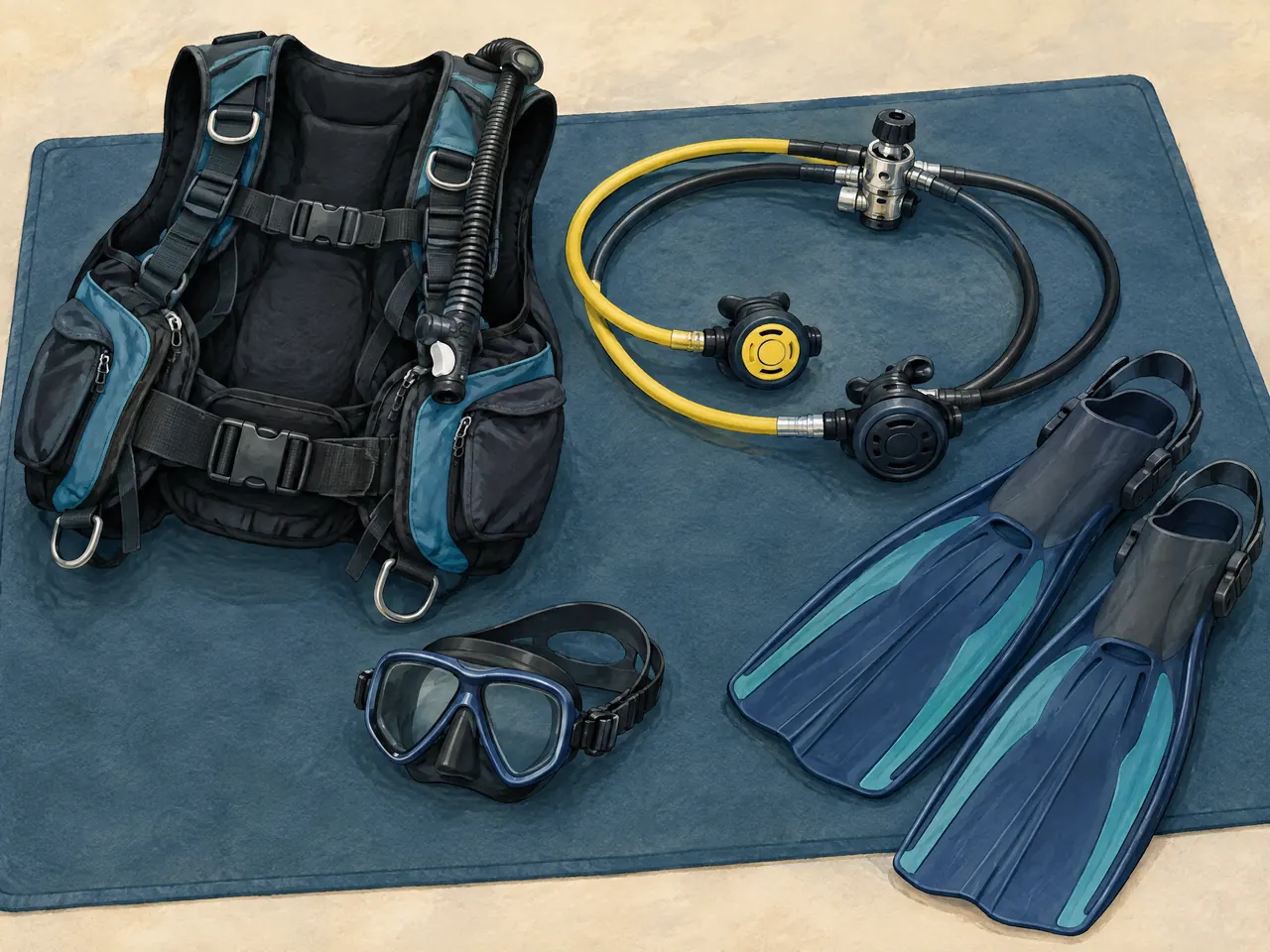
Unbranded buoyancy compensator, regulator assembly, mask and fins arranged separately on a dry preparation mat
Illustrative equipment objects to support questions about preparation and supply; not a confirmed rental package or an equipment-use demonstration.Generated illustrative image

Distinguish an equipment concern from a learning question

When preparing for instructor feedback, keep two kinds of question separate: 'Could we discuss whether this equipment fits me?' and 'Could you explain the learning point again?' The masks and fins illustration gives the first conversation a concrete subject without showing a fitting method. Describe the concern in your own words and ask when the instructor can review it in the teaching setting. Do not decide from a photograph that an item is suitable, or treat an equipment adjustment as proof that an assessment requirement has been met.
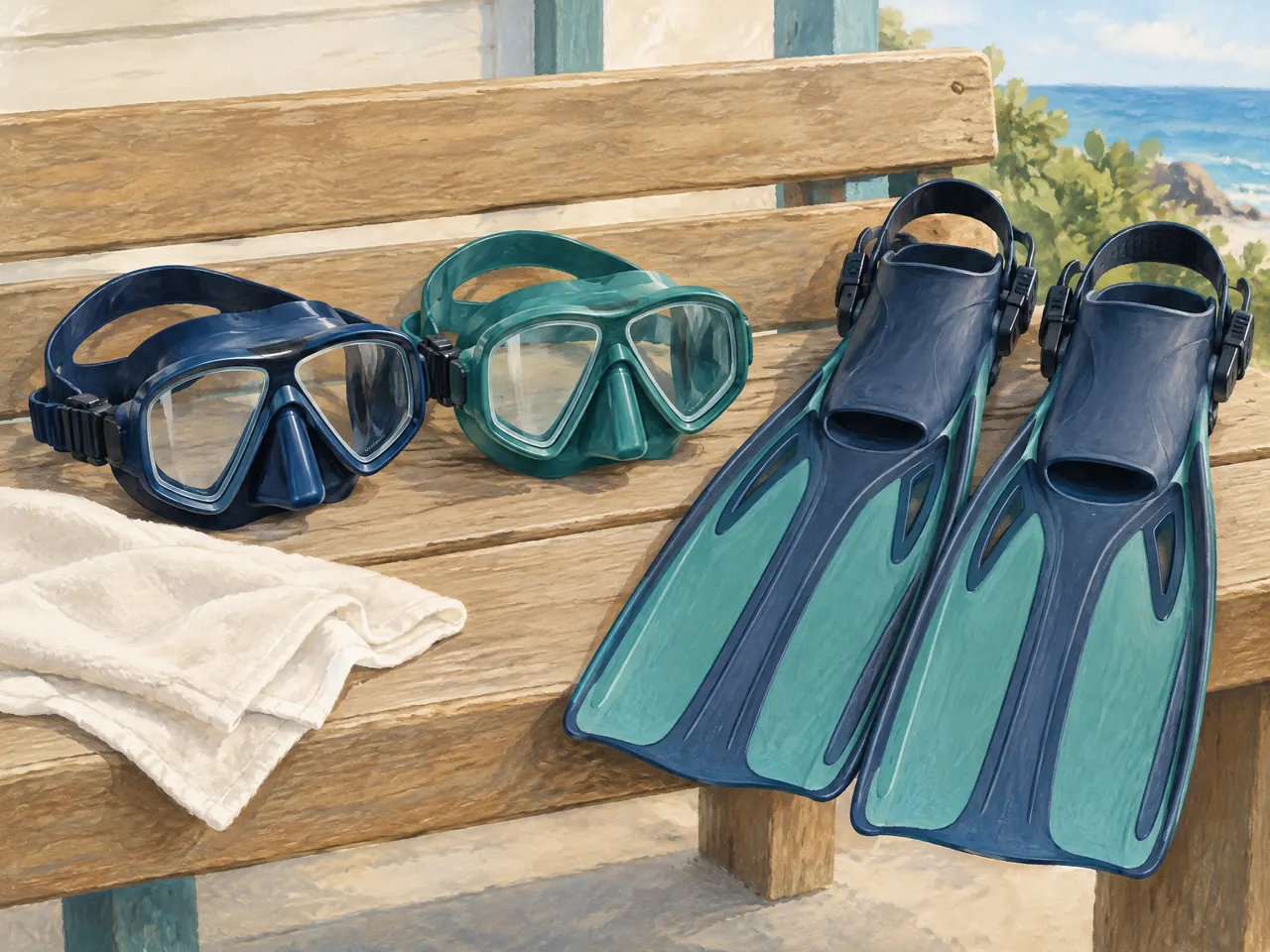
Two generic scuba masks and separate adjustable fins on a bench beside a clean cloth
Illustrative masks and fins for a fit-and-comfort conversation; not individual fitting advice, a product recommendation or evidence of assessment progress.Generated illustrative image

Keep the learning note separate from a changed appointment

If conditions change a planned session, keep two records: the revised appointment arrangements and the learning questions still awaiting discussion. Ask the provider whether the session is postponed or reorganised, which preparation remains relevant and when you will receive confirmation. Copy unresolved feedback questions into the revised plan instead of marking them complete merely because a date has moved. The weather objects are a reminder to ask about contingencies, not a forecast, a safe-weather threshold or permission to make your own diving decision. Any replacement arrangement still needs its applicable written terms.
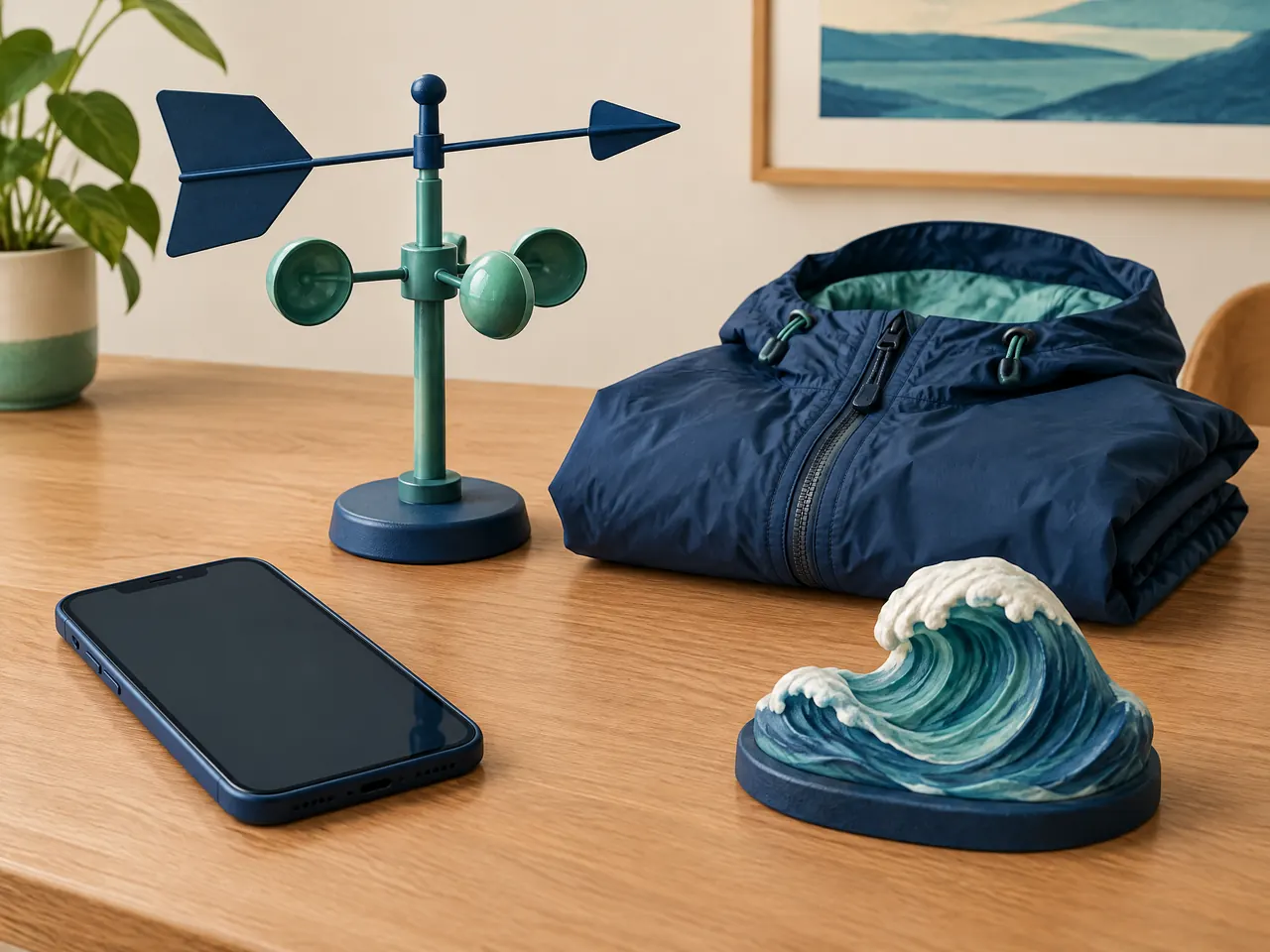
Unbranded phone with a blank screen beside a wind vane model, rain shell and miniature wave sculpture
Illustrative weather and planning objects for a changed-session enquiry; no forecast, safe-condition threshold or replacement-date promise is shown.Generated illustrative image

Separate personal preparation from course equipment

Once the provider identifies the practical setting, ask for a personal packing list as well as the course-equipment list. The bag, towel, bottle and hat illustration suggests questions about belongings: what should you bring, where can it be kept, and what changing arrangements need confirmation? Note any answer beside the relevant session rather than assuming one list applies to every venue. Pack your question note as part of preparation, too, so an equipment or logistics concern does not crowd out the learning discussion you wanted to have.

Open dry bag with a towel, water bottle and sun hat beside deck-shoe silhouettes on an abstract empty timber surface
Illustrative personal belongings for a training-day packing enquiry; not a compulsory kit list or a record of an actual boat, class or venue.Generated illustrative image

Clinic enquiries

Contact and appointment arrangements

Clinics
Prince Edward and Kwun Tong
Opening hours
11:00–21:00
WhatsApp and telephone
+852 6940 5663

Appointments, practitioner availability and service arrangements are confirmed via WhatsApp.

Please mention any consultation language needs in your WhatsApp enquiry so that arrangements can be confirmed.

Enquire via WhatsApp
Food, gifts and floral lifeWhatsApp enquiry