
Prince Edward & Kwun Tong clinics · Home-visit enquiries elsewhere

TCM Lab

TCM Lab · Outdoor learning & coastal life / Courses and booking

Learning from Hong Kong Island: plan each class journey

Content updated

Living or working on Hong Kong Island gives your diving enquiry a starting point, not a confirmed classroom. Make learning fit your week by planning the journey to each session separately, including the trip home.

Illustrative scuba learning preparation objects
AI-generated illustrative concept; not an actual DiveHarbour class, student or dive-site record.

The short answer

Choose your learning goal first, then ask for a session-by-session outline with confirmed meeting addresses, arrival instructions, equipment arrangements and return details. Compare transport from wherever you will actually start that day. Keep study time, changing time and possible venue changes in the plan rather than assuming every class takes place on Hong Kong Island.

DiveHarbour is a separate diving school under the same ownership as TCM Lab. Diving courses and activities are separate from Chinese medicine care; reading this collection or visiting TCM Lab does not replace medical fitness-to-dive assessment or clearance.

Use the Island as your starting point, not a venue promise

A search for a Hong Kong Island scuba diving course can begin with a very ordinary concern: can you reach the lessons from home or work without making the week unmanageable? DiveHarbour's Island page asks learners to confirm meeting, pool or sea arrangements and the travel route. It does not turn your preferred district into a booked classroom or swimming pool. Start your enquiry with where you will travel from, rather than assuming the location label describes every session. [1]

Your weekday starting point may differ from your weekend one. Someone working in Central but living in an eastern district could have two different journeys to the same meeting address. Check both before deciding that a course is convenient. Avoid using a map search for the general area as a substitute for the provider's instructions: an equipment collection point, practical venue and meeting point can serve different purposes. [1]

Describe the constraints that matter to you. Perhaps you cannot leave work until a particular time, prefer fewer transfers with a wet bag, or need step-free access. These are useful questions, not requests to guarantee a nearby venue. Ask which arrangements are confirmed and which remain provisional. That distinction lets you make a realistic choice without mistaking a regional information page for a branch directory.

Choose what you want to learn before filling your calendar

Before arranging travel, decide whether you want a supervised introduction or an entry-level certification pathway. DiveHarbour's guide to learn to scuba dive in Hong Kong explains those as different commitments. An introduction can help you explore your interest; it should not be treated as a qualification simply because you attended. A certification enquiry needs a clearer account of study, practical training and completion requirements for the chosen programme. [2]

Ask how the learning is divided, rather than asking only how many dates you must reserve. The beginner guide describes knowledge preparation, controlled-water practice and open-water training, with the details depending on the selected course. Confirm whether any study happens independently, whether there is a scheduled review and what must be completed before a water session. This helps you avoid fitting the travel into your diary while leaving no time to prepare. [2]

A convenient timetable is not the whole decision. Ask how questions are handled and what happens if you need more practice. The proposed agency, course name, prerequisites and assessment requirements should be clear before you pay. Do not transfer a rule from a friend's different programme into yours. An after-work class also tells you when something happens, not that it is a night dive; ask what the actual session involves.

Make a separate journey note for every session

Once you receive a proposed outline, give each session its own note. Record the session purpose, meeting address, requested arrival time, where the activity takes place and where you expect to finish. Ask whether the meeting point and practical venue are the same, and whether any transfer is organised or left to you. DiveHarbour's Island guide specifically recognises that classroom, collection point, pool and pier locations may differ. [1]

Separate arrival from readiness. Reaching a building does not necessarily mean you have found the entrance, checked in or changed. Ask whether the stated time means meeting the group or being ready for the briefing. Add your own margin for unfamiliar exits and the final walk, without presenting it as the provider's requirement. If the entrance instructions are unclear, resolve that before setting out rather than trying to interpret a message while carrying bags.

Keep the return details in the same note. Will you finish at the original meeting point or elsewhere? Is the finish time an estimate, and when will it be updated? A class that looks manageable on the outward journey may clash with your evening obligations on the way home. Where the finishing point is not yet confirmed, leave it visibly unresolved instead of quietly assuming the group returns to the Island.

Compare the whole route, including walking and transfers

After the provider confirms the address, use a current journey planner to compare routes from your actual starting point. The Transport Department's HKeMobility offers public-transport, driving and walking searches, with point-to-point planning that combines transport and walking. It also provides arrival information and traffic news. These tools help you consider the complete journey rather than measuring convenience by the nearest station alone. [4]

The fastest suggested route may not be the easiest for that session. Consider how many transfers you would make, how far you would walk with the agreed kit, and whether the final approach is unfamiliar. Compare a second feasible route and check its current service information rather than assuming a backup will always be available. No general Island-to-venue travel estimate can replace the details for your address, date and departure time.

HKeMobility allows favourite locations and routes to be bookmarked, which is useful once the meeting point is settled. Save the provider's latest confirmation alongside your route information, then check for updates before leaving. [4] If you are delayed, use the communication method given in that confirmation and ask what to do. Do not assume that arriving at the practical venue independently will solve a missed group meeting.

Treat a possible Sai Kung session as a separate travel day

If the proposed training includes a sea session connected with Sai Kung, review the Sai Kung scuba diving course information as a second logistics conversation. DiveHarbour asks learners to confirm the pathway, meeting point, pool and open-water arrangements, equipment, dates and travel route. An Island-based enquiry does not establish an Island departure, and a Sai Kung course label does not establish a particular pier or boat itinerary. [3]

Ask where the group actually meets and whether you travel onward together. If a boat is part of the proposal, clarify what transport is included and where the day ends. Do not book your journey merely to the centre of Sai Kung and assume the rest is obvious. Also ask about changing arrangements, storage of dry belongings and which personal items to bring. These questions affect how comfortably you can travel, not just whether you arrive.

Check how that day fits around your other commitments. An estimated return is not a fixed appointment time, particularly while the sea plan remains provisional. Keep the later part of the day flexible where possible, and tell the provider about constraints before accepting the outline. If the proposed sea-day journey is impractical, ask whether another currently available learning arrangement would suit you; do not assume a local alternative or a private transfer is included.

Pack for the confirmed session and protect study time

Use the equipment list for the actual session, not a generic diving shopping list. Ask what is supplied, what you carry and whether anything is collected at another location. For a water session, confirm the requested swimwear, towel and change-of-clothes arrangements. Keep documents and electronics separate from wet items, and ask about storage rather than assuming lockers are available. The beginner guide recommends confirming equipment, venue, transport and other inclusions before registration. [2]

Give knowledge preparation its own place in your week. Quiet time for reading and questions is different from a train journey squeezed between work and class. If you are studying independently, note anything unclear and bring those questions to the review. After each lesson, make a short record of what the instructor asked you to prepare next. That is more useful than measuring progress only by the number of calendar entries completed.

Complete the provider's health screening honestly and raise personal medical concerns with an appropriate physician before participation. Neither this TCM Lab lifestyle article nor a TCM Lab consultation provides fitness-to-dive clearance. Tell the instructor if you are unwell or struggling rather than hiding it to preserve a booking. Friends can coordinate journeys, but each learner should choose freely and progress individually; sharing transport does not mean everyone must finish together.

Know how changes will be confirmed before you leave

The weather outside an Island office is not a complete picture of a sea session. The Hong Kong Observatory provides marine forecasts and warnings that include wind, significant weather and sea-state information. [5] Check current official information together with the operator's instructions, but do not use a forecast to decide that a particular site is suitable yourself. Ask when and how the provider will confirm the plan, and what you should do if you have already started travelling.

Understand the written booking terms before payment. DiveHarbour's published fee notice says all fees are non-refundable and make-up sessions are subject to written terms. [2] [3] A weather change, missed connection or personal scheduling problem should not be treated as an automatic refund or guaranteed replacement date. Ask how those circumstances are handled, including any applicable make-up conditions, and retain the response with your booking record.

Finish your enquiry with a short, answerable request: explain where you will start each day, your learning goal and your available dates, then ask for the proposed session outline, logistics, inclusions and terms. Mark outstanding details as awaiting confirmation. You do not need to predict every disruption; you need to know which journey you are making, what has actually been agreed and where to look for the latest instructions. That is a practical way to make diving learning fit Island life.

Take it into everyday life

A practical checklist

  • State your starting district for weekdays and weekends, your learning goal and your available dates.
  • Confirm the course name, agency, prerequisites and whether the booking is an introduction or certification training.
  • Request a separate meeting address, arrival instruction, activity venue and finishing point for each session.
  • Ask whether equipment collection or onward transfers create an additional journey, and what transport is included.
  • Compare current routes including the final walk; save the confirmed address and a feasible alternative route.
  • Confirm the personal kit list, changing arrangements and storage rather than buying or carrying unrequested equipment.
  • Reserve study time and record questions to discuss with the instructor.
  • Read the non-refundable-fee and conditional make-up terms, and check how plan changes will be communicated.

Questions & answers

Does a Hong Kong Island location page mean every lesson is on the Island?

No. Use it as information for learners starting from the Island, not as confirmation of a classroom or pool. Ask for the actual meeting point and activity venue for each session. DiveHarbour's Island guide notes that classroom, equipment collection, pool and pier arrangements can differ. [1]

What should I ask if I want to attend after work?

Give your actual work-area starting point and the earliest time you can leave. Ask what the proposed session involves, what preparation is required and whether the arrival instruction allows time for changing or check-in. An evening class is not automatically a night dive, and no evening availability should be assumed without confirmation.

Can I plan all my journeys from one course address?

Only if the provider confirms that address applies to every relevant session. Keep separate notes where meeting, collection, pool or sea arrangements differ. Plan the return from the confirmed finishing point too, rather than assuming you always go back to the original address. [1]

How can I compare public-transport options without relying on a fixed travel estimate?

Enter the confirmed meeting address and your real starting point in a current route planner. HKeMobility combines public transport and walking information and offers arrival updates and traffic news. Compare transfers and the final walk as well as suggested duration, then recheck the information before departure. [4]

If Sai Kung is mentioned, should I travel straight to a pier?

Not without the current meeting instructions. Ask whether Sai Kung is part of your specific training plan, where you meet, whether the group travels onward together and where you finish. A regional course page is not a confirmed boat itinerary or proof of an included transfer. [3]

Will a weather change or missed class guarantee a refund or make-up date?

No. DiveHarbour's published fee notice states that all fees are non-refundable and make-up sessions depend on the written terms. Read those terms and ask how weather changes, missed attendance and personal circumstances are handled before payment. Do not assume a preferred replacement date is guaranteed. [2] [3]

Sources & further context

Numbered references follow the source order below. Course websites describe their own programmes; health and coastal sources have separate purposes and do not endorse commercial course quality.

  1. [1] DiveHarbour — Scuba Diving on Hong Kong Island
  2. [2] DiveHarbour — Learn to Scuba Dive in Hong Kong
  3. [3] DiveHarbour — Sai Kung Scuba Diving Course
  4. [4] Transport Department — All-in-one Mobile Application HKeMobility
  5. [5] Hong Kong Observatory — Marine Meteorological Services

Resolve the equipment handover before choosing a route

Add an equipment handover line to your session note: what you collect, where you collect it, what you carry onward and where it is returned. Ask whether collection happens before the group meeting or at the activity venue. If you are leaving an Island workplace, check whether that extra stop still fits your earliest departure time. A supplied-equipment arrangement does not, by itself, answer the question of who carries the kit between locations. Confirm this before choosing the route.
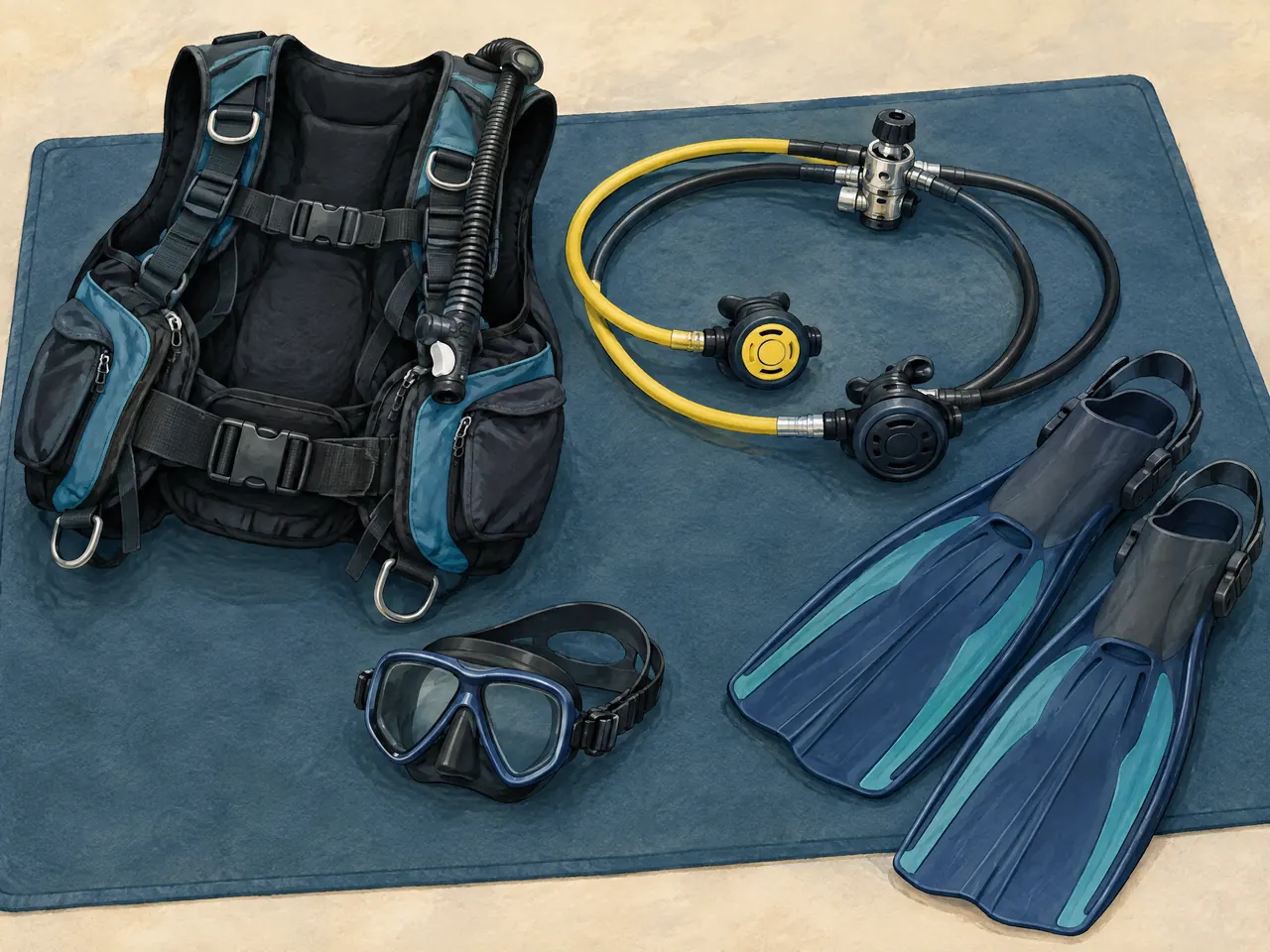
Illustration of a buoyancy compensator, regulator assembly, mask and fins arranged separately on a dry preparation mat
Conceptual equipment illustration for discussing collection and carrying arrangements; not a record of supplied DiveHarbour kit or an actual course.Generated illustrative image

Ask when equipment fit can be discussed

When confirming the arrival instructions for a water session, ask when you can discuss the fit and comfort of supplied masks or fins with the instructor. Keep that question separate from the journey time: reaching the venue and being ready to join a briefing are different milestones. If you have a concern, describe it before the session rather than buying a replacement on the assumption that it will be accepted. Ask what personal equipment, if any, the provider wants you to bring.
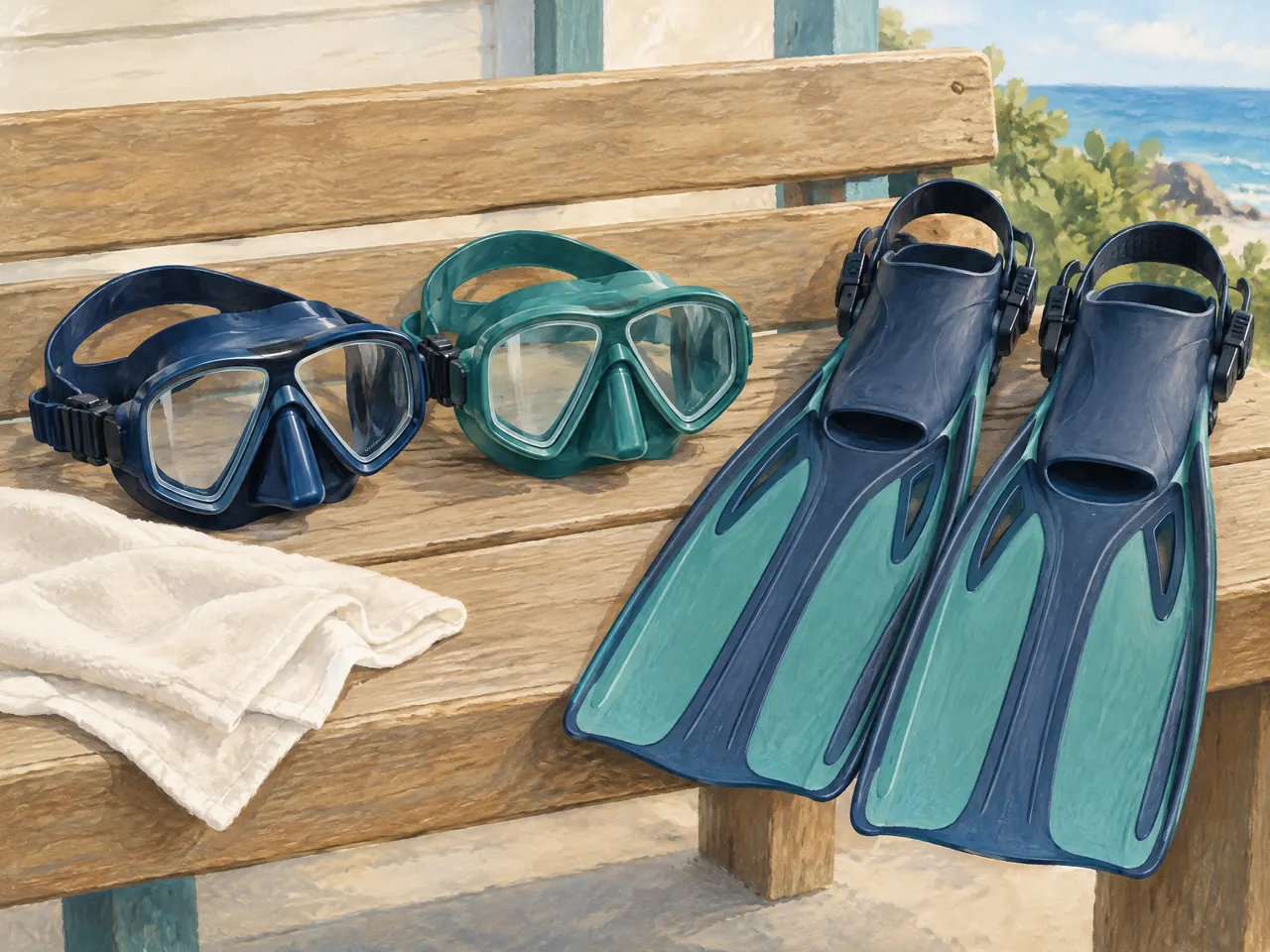
Illustration of two generic scuba masks and adjustable fins on a bench beside a clean cloth
Conceptual masks and fins for equipment-fit questions; not a fitting demonstration or a promise about available equipment.Generated illustrative image

Give each learning stage its own planning line

Divide your working note into knowledge preparation, controlled-water practice and open-water training only where those stages apply to the proposed course. Beside each, record whether you have a study task, a confirmed appointment or a detail still awaiting a reply. This makes it easier to spot a practical session whose address is missing, or a study task with no time reserved. Do not turn the illustration's separate book, pool and cove into assumed venues or a fixed syllabus: the provider's course outline determines the actual plan.

Conceptual illustration of a closed book, an empty miniature pool and a separate abstract open-water cove
Separate study and water-practice settings illustrate planning questions, not confirmed classrooms, pools, dive sites or course requirements.Generated illustrative image

Pack for the journey after the session too

Review your personal bag against the confirmed finishing point, not only the outward trip. Ask what can stay dry during the session and where you can change before travelling home or onward. Put the provider's requested personal items on one list and specialist equipment arrangements on another, so you do not mistake an outing illustration for a required kit list. If the return involves transfers, consider how you will keep wet items apart from your work belongings without assuming storage or changing facilities are included.
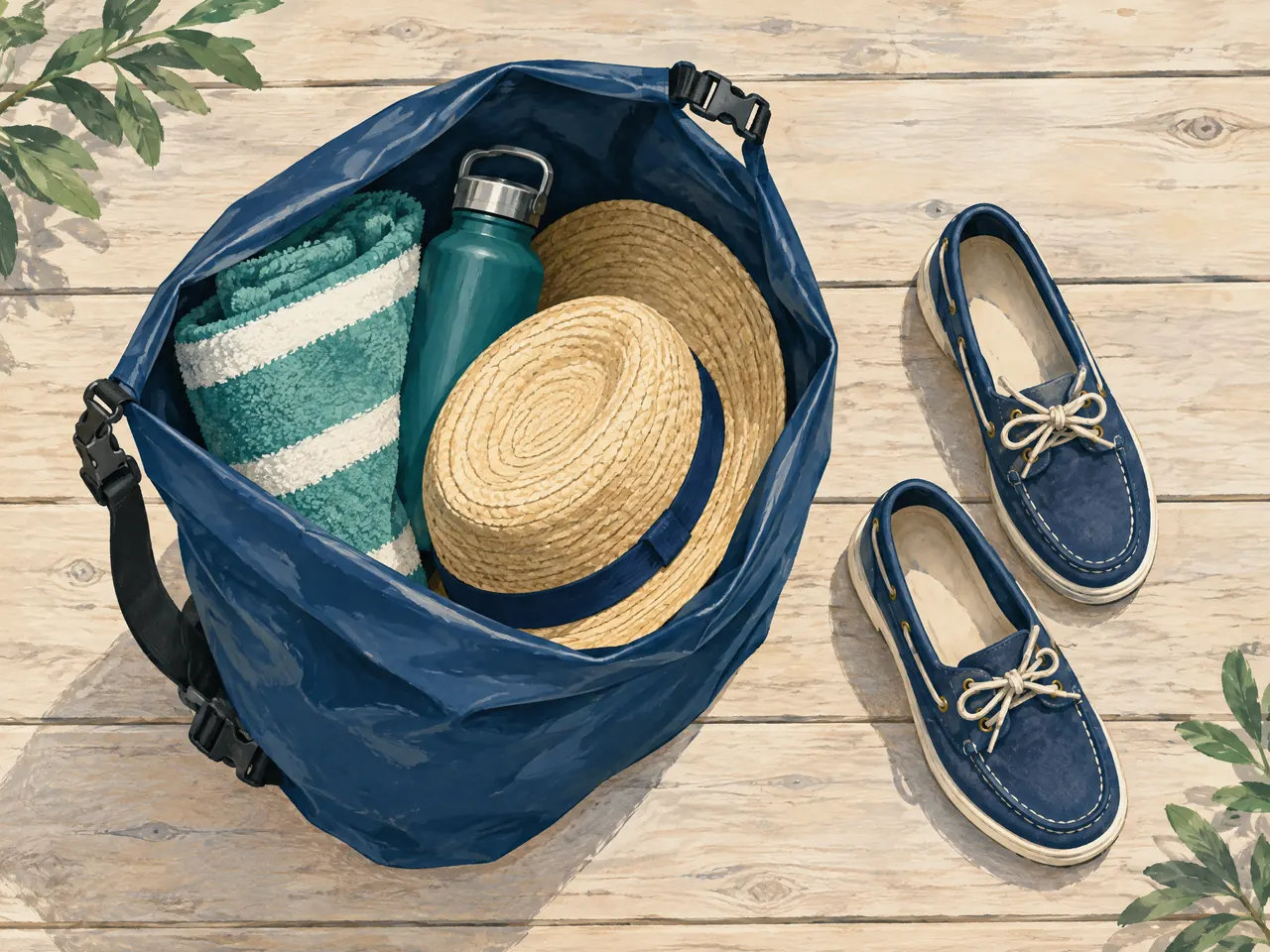
Illustration of an open dry bag with a towel, water bottle and sun hat beside deck-shoe silhouettes on an abstract timber surface
Conceptual personal-packing scene; follow the confirmed session's kit list rather than treating these objects as compulsory or supplied items.Generated illustrative image

Keep a clear record of the latest travel instruction

Keep the latest provider confirmation together with its date and the session it applies to. When an address or meeting time changes, mark the earlier note as superseded rather than leaving two apparently current instructions in your bag. Ask what to do if an update arrives after you have left the Island, including whether you should wait for a reply before travelling onward. The blank phone and weather objects illustrate this communication step; they do not show a forecast or establish whether a sea session can proceed.
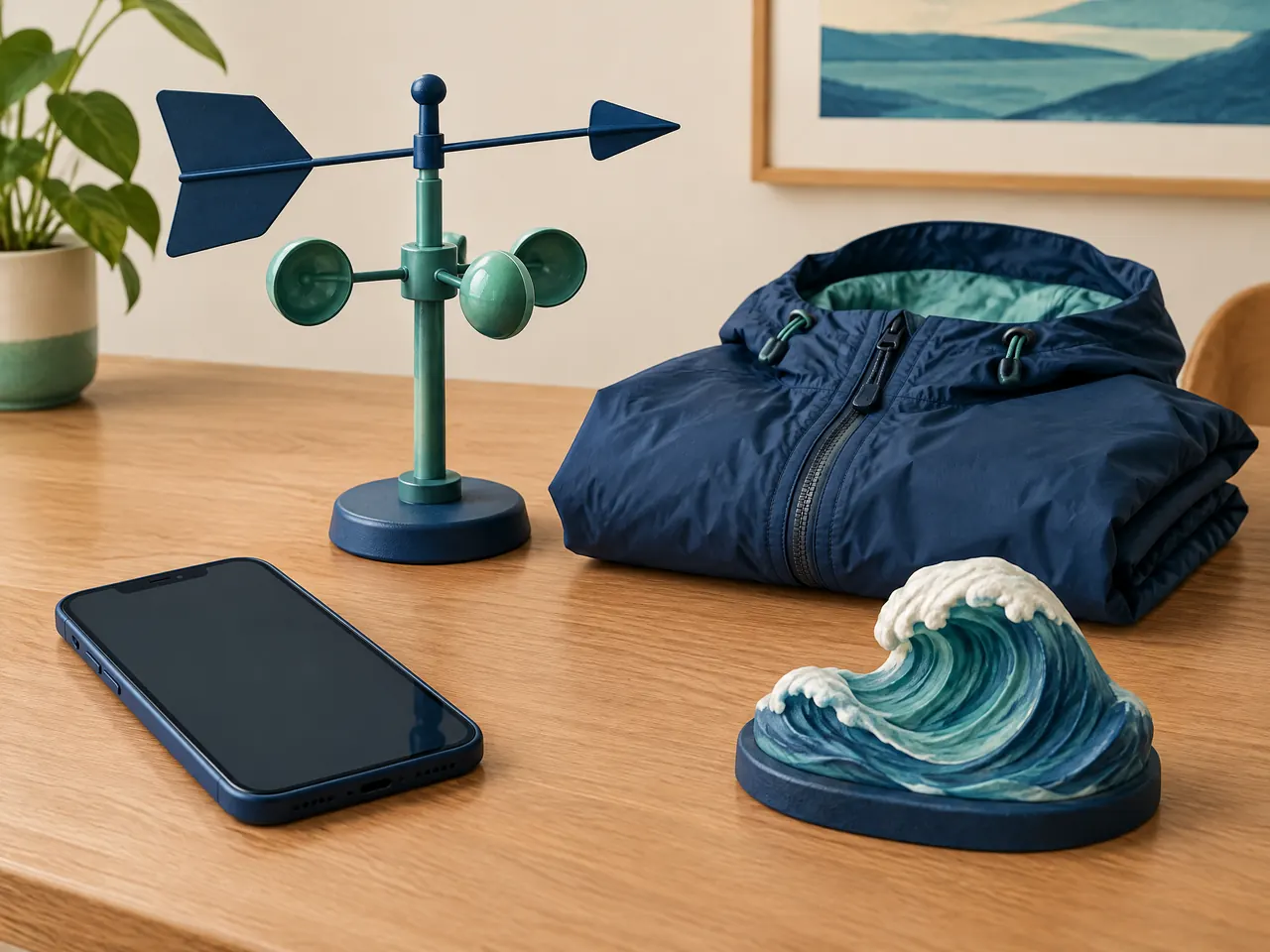
Illustration of a blank-screen phone beside a wind vane model, rain shell and miniature wave sculpture
Conceptual weather-and-communication reminder; not live forecast information, a safe-weather threshold or an operator's departure decision.Generated illustrative image

Clinic enquiries

Contact and appointment arrangements

Clinics
Prince Edward and Kwun Tong
Opening hours
11:00–21:00
WhatsApp and telephone
+852 6940 5663

Appointments, practitioner availability and service arrangements are confirmed via WhatsApp.

Please mention any consultation language needs in your WhatsApp enquiry so that arrangements can be confirmed.

Enquire via WhatsApp
Food, gifts and floral lifeWhatsApp enquiry