

Prince Edward & Kwun Tong clinics · Home-visit enquiries elsewhere

TCM Lab

TCM Lab · Hair choices & preparation / Hair assessment

Hair transplant and scalp micropigmentation are different decisions

Content updated

Before comparing fees, decide whether you need an explanation for hair loss, surgery that moves hair, or pigment that changes the appearance of the scalp. Each calls for different questions and a different kind of consent.

Illustrative hair care and observation objects
AI-generated illustrative concept; not a DT Hub location, product photograph or case record.

The short answer

A hair transplant moves hair from a donor area into a thinning or bald area. Scalp micropigmentation deposits pigment to create an appearance of coverage; it does not grow hair. An assessment investigates what is happening before either decision. Compare suitability, the named practitioner, risks, aftercare and the complete written quote—not just the starting price. [1] [2] [3]

DT Hub is an external website under the same ownership as TCM Lab, with salon and Academy, hair assessment and Chinese medicine hair-growth information, and wig sections. Salon services and scalp spas concern styling and beauty care; Academy concerns skills learning. Chinese medicine and medical options require individual assessment and do not guarantee hair growth; wigs are appearance products, not treatment. Business sources support service information, not evidence of medical effectiveness.

Find out why hair is changing before choosing coverage

A widening part, a receding hairline and sudden shedding can lead to the same worry, but they do not automatically call for the same response. The American Academy of Dermatology explains that effective treatment starts with finding the cause. A dermatologist asks about the timing, examines the scalp and may arrange tests if the findings suggest an underlying problem. A blood test or biopsy is not required for everyone. The purpose is to answer a clinical question, rather than to sell a standard package. [1]

Write down when the change began and whether it has been gradual, patchy or sudden. Bring dated photographs and a list of medicines, supplements and previous treatments. Include recent illness or childbirth if relevant; some forms of shedding may recover without surgery. New bald patches or a painful, inflamed scalp deserve medical assessment before a cosmetic booking. Ask what diagnosis is being considered, what remains uncertain and whether watching the change for a defined period is reasonable. Do not assume a close-up scalp photograph alone settles the cause. [1]

A transplant moves hair and requires a surgical plan

A transplant is cosmetic surgery, but it is still a medical procedure. It moves hair from a donor area to another part of the scalp; it does not create an unlimited supply of new hair. The NHS describes two approaches: follicular unit transplantation, or FUT, removes a strip of hair-bearing skin, while follicular unit extraction, or FUE, removes individual grafts. Both involve placing grafts into small scalp cuts. FUT leaves a strip scar and FUE leaves many small scars, so an offer described as completely scar-free needs questioning. [2]

Suitability depends on the pattern of loss and the proposed donor and recipient areas. The NHS notes that transplantation is generally considered for permanent hereditary baldness and is not usually suitable for alopecia areata. Ask the surgeon to explain the diagnosis, donor supply and proposed hairline, including how it might look if surrounding hair continues to thin. Discuss bleeding, infection, anaesthetic reactions, unsuccessful grafts and visible scars. A photograph of a good outcome cannot tell you your own risk or replace an individual surgical consultation. [2]

Pigment changes the scalp's appearance, not hair growth

Small pigment dots can reduce the visual contrast between hair and scalp or imitate a closely shaved look. They do not become strands that you can grow, part or style. Cleveland Clinic explicitly describes this as cosmetic camouflage rather than a treatment that changes natural hair growth. DT Hub's scalp micropigmentation information page can prompt questions about appearance options, but keep this distinction clear when enquiring: pigment does not regenerate follicles or treat the underlying cause of thinning. Confirm what the appointment would actually involve before making a booking. [3]

For a pigment consultation, explain your usual haircut and how often you change its length. Ask to see healed examples with similar colouring and coverage goals, not only pictures taken immediately after a session. Discuss the proposed hairline, pigment choice and what happens if you dislike the appearance. Cleveland Clinic identifies pigment allergy, infection from unsterilised needles and unwanted appearance as possible risks; a tendency to form keloid scars also matters. Tell the practitioner about allergies and previous unusual scarring before consenting. Cosmetic does not mean risk-free. [3]

Compare the contents of a quote, not two headline prices

Someone searching for hair transplant cost hong kong may find broad comparisons before receiving a surgical quote. Use that reading to prepare questions, not to treat an advertised range as your personal total. Ask a surgical provider for the method, treatment area and proposed graft count, with a clear explanation of whether the quoted number means grafts or individual hairs. Request an itemised figure in Hong Kong dollars that identifies consultation, anaesthesia, medicines and follow-up charges. A general comparison page is not confirmation that its publisher performs transplant surgery.

An SMP quote needs a different scope: the scalp area, planned sessions, design approval, aftercare and the terms for any later touch-up or correction. For either option, ask what happens if the plan changes after examination, and whether another session would cost extra. Read deposit and cancellation terms before paying. Keep possible transport costs and time away from work separate from the provider's bill. There is no useful like-for-like price comparison until you know what each offer includes and which costs remain uncertain. The cheaper headline may describe a smaller or less complete service.

Check the person responsible for the proposed procedure

For surgery in Hong Kong, obtain the operating doctor's full name and use the Medical Council of Hong Kong's published General Register and Specialist Register information to check registration and any claimed specialist listing. Registration is a starting check, not proof of a particular transplant result. The NHS also recommends asking a surgeon about relevant experience, complications and follow-up. Ask who will perform each part of your operation, who is responsible for your care and whom you can contact if a problem develops after you leave. [2] [4]

For pigment work, ask about the practitioner's relevant training and experience, their healed work, single-use needles and infection-control arrangements. A course certificate should not be confused with a medical qualification. If a provider uses the word 'licensed', ask who issued it and what activity it covers rather than assuming that an overseas licensing term applies in Hong Kong. If your scalp needs medical assessment, ask who will provide it and whether referral is needed. One professional's styling or cosmetic experience does not establish another person's competence to diagnose hair loss or perform surgery. [3]

Fit aftercare and follow-up into your actual calendar

Do not schedule a transplant simply because you have one free afternoon. The NHS notes that people may need time off work and must protect new grafts early on; the surgical team should give individual washing and exercise instructions. Growth is not immediate, and judging the outcome takes months. Ask what is expected during recovery, when photographs or examinations will be reviewed, and which symptoms require prompt contact. Make sure the emergency contact arrangement still works on a day when your usual clinician is not available. [2]

Pigment work does not have the same surgical recovery, but 'no downtime' should not be read as 'no restrictions'. Cleveland Clinic describes temporary precautions around wetting the scalp, heavy exercise, steam, sun and sweating. Ask how these apply to your commute, gym routine or outdoor job, and get written instructions for your particular session. Fever, pus, severe pain or marked redness and swelling after pigment work need medical attention. Do not conceal a concerning reaction with hair products and wait for a routine touch-up appointment. [3]

Make an assessment booking specific—and leave room to wait

When considering a hair growth center hong kong enquiry, say whether you want help understanding loss, discussing treatment or exploring camouflage. DT Hub lists Chinese medicine acupuncture and herbal services alongside hair and scalp care, with an assessment enquiry route. Confirm who will see you, the scope of that appointment and any current charge. Its stated location is Unit 03, 21/F, Billion Trade Centre, 50 Hoi Yuen Road, Kwun Tong; confirm appointment details before travelling. Do not assume that booking an assessment also books a surgeon or pigment practitioner. [5]

Keep the roles separate when reviewing recommendations. Haircuts, colour services and training courses concern styling or skills; scalp spa concerns cosmetic care. Neither establishes the cause of shedding. Chinese medicine options require individual discussion of suitability and safety, while a proposed transplant needs surgical evaluation. Wigs and concealers change appearance without growing hair, and may be worth discussing if you want coverage while deciding. [1] You can leave with questions, seek another opinion or choose no procedure. A useful consultation should clarify the next decision, not require you to make every decision that day.

Take it into everyday life

A practical checklist

  • Record your main goal: understand the cause, consider moving hair, or change the appearance of scalp coverage.
  • Bring dated photographs, a brief hair-loss timeline and your medicine, supplement and treatment list.
  • Ask for the named practitioner and check the qualifications relevant to the specific service.
  • Request a written plan and itemised HKD quote, including sessions, follow-up, exclusions and possible extra charges.
  • Discuss scars, allergies, infection risk and what an unwanted or unsuccessful outcome would mean for you.
  • Get personalised aftercare instructions and a working contact route for unexpected symptoms.
  • Confirm the Kwun Tong appointment details and fees directly; do not pay a deposit until its terms are clear.
  • Take the proposal home if you need time, and seek a medical opinion when the cause of loss remains unclear.

Questions & answers

Will scalp pigment make my hair grow again?

No. It creates an appearance of coverage with pigment dots; it does not grow hair or change your natural growth. If stopping or investigating hair loss is your goal, discuss that separately with an appropriately qualified clinician. A darker-looking scalp is not evidence of new hair. [1] [3]

Is FUE genuinely scar-free?

No. The NHS explains that FUE leaves multiple tiny scars, whereas FUT leaves a scar where the strip was removed. How noticeable they are can vary. Ask the surgeon to discuss donor-area appearance at your preferred haircut length rather than relying on a scar-free slogan. [2]

Can I choose between surgery and pigment using price alone?

That would compare different outcomes. Surgery moves hair; pigment changes the visual appearance of the scalp. First establish whether either suits your goal and health circumstances. Then compare complete written quotes within the option you are considering, including aftercare and possible additional sessions. [2] [3]

Does a scalp assessment mean I am ready for a transplant?

Not necessarily. An assessment may identify a need for further medical evaluation, observation or a non-surgical approach. Transplant suitability and donor planning need a surgical consultation. Ask what the assessment has established and what questions still need answering before consent. [1] [2]

Which qualification should I check for a Hong Kong transplant doctor?

Start with the doctor's full name and the Medical Council of Hong Kong's registration information, including the Specialist Register if specialist status is claimed. Then ask about relevant procedure experience, who will operate and complication follow-up. A register listing is not a guarantee of an outcome. [2] [4]

What if my remaining hair keeps thinning after a transplant?

The NHS notes that hair around a transplant can continue to thin. Ask the surgeon how the proposed design accounts for that possibility and whether ongoing management should be discussed. Do not assume one operation fixes every future change in density. [2]

Can I go straight back to swimming or heavy exercise after pigment work?

Do not assume so. Cleveland Clinic describes temporary restrictions on wetting the scalp, heavy exercise, steam and sweating. Get the timing and washing instructions from your practitioner for your specific session, and plan activities around those instructions rather than a general no-downtime claim. [3]

Sources & further context

Numbered references follow the source order below. Business websites provide relevant service or product information, not evidence of medical effectiveness.

  1. [1] American Academy of Dermatology — Hair loss: Diagnosis and treatment
  2. [2] NHS — Hair transplant
  3. [3] Cleveland Clinic — Scalp Micropigmentation
  4. [4] Medical Council of Hong Kong — List of Registered Medical Practitioners
  5. [5] DT Hair Growth — Service and assessment information

Make your medicine and supplement record reviewable

Turn your medicine list into something a clinician can check. Include the product name, dose and when you started it; bring packaging or a clear label photograph if you are unsure what it contains. Record previous reactions separately so they are not lost among treatment names. Ask who should review this information before a procedure and who will give you instructions if a change is needed. Buying extra hair supplements is not a substitute for that review: the American Academy of Dermatology notes that supplements for certain nutrients are appropriate when a deficiency is established, and excess iron can be harmful. [1]

Illustration of closed unbranded medicine containers, a sealed pouch and a blank note card beside a consultation folder
Prepare product names and doses for professional review. Illustrative objects, not prescribed products or a patient's medicine record.Generated illustrative image

Explore removable coverage while you decide

If your immediate concern is how exposed scalp looks, ask about removable coverage while you consider the longer-term decision. A topper and a full wig offer different coverage areas, so describe which area bothers you and ask to inspect how the item sits and is removed. Check the fitting and return terms before buying, rather than assuming a trial is included. The American Academy of Dermatology identifies wigs and concealers as appearance options, not ways to slow loss or regrow hair. Trying coverage does not establish a diagnosis or tell a surgeon whether your donor area is suitable for transplantation. [1] [2]
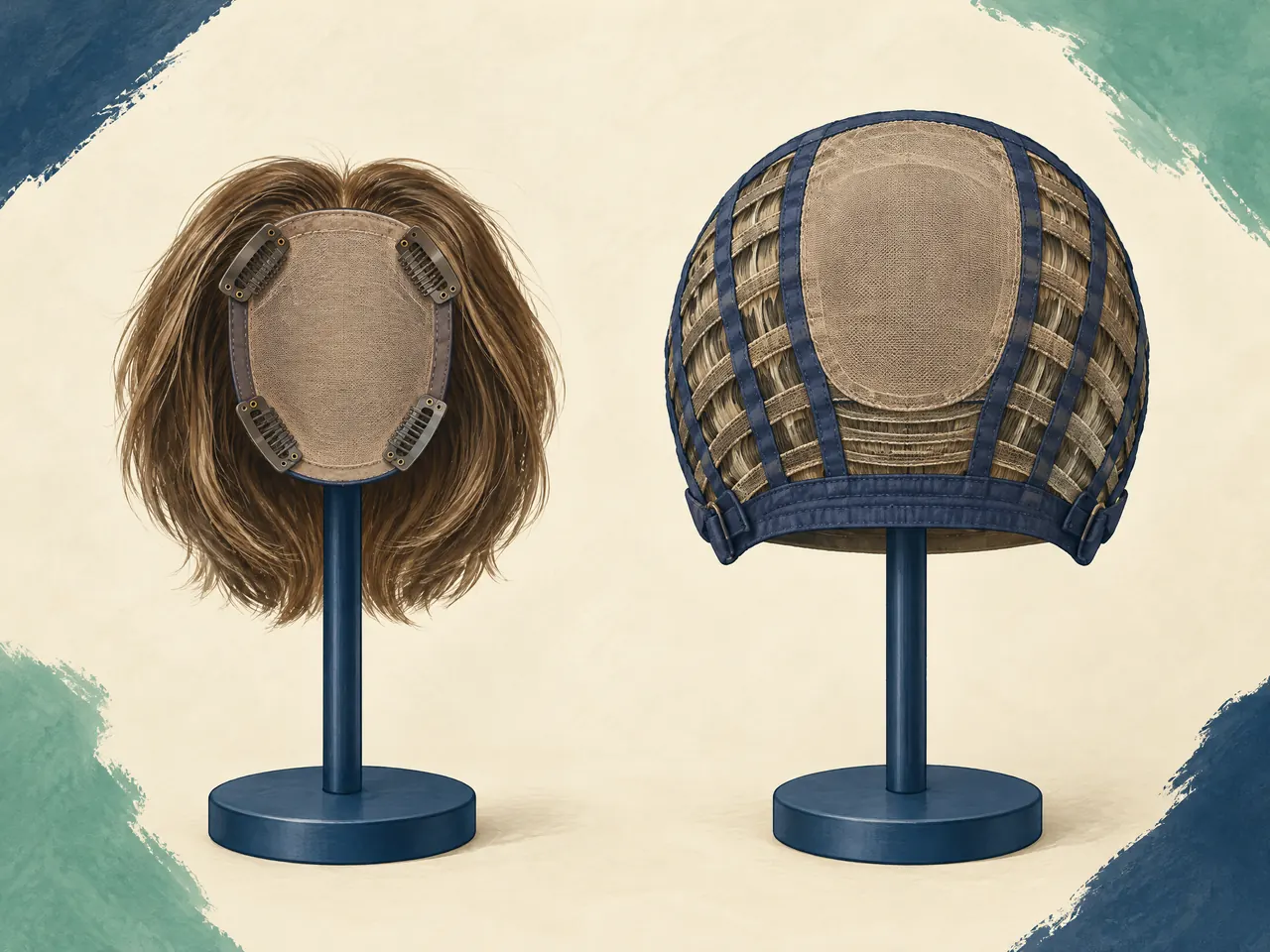
Illustration of a small removable topper and a full empty wig cap on separate plain stands, with their underside construction visible
Partial and full-cap coverage prompt different fitting questions. Generic illustrative hairpieces, not DT Hub products or a coverage result.Generated illustrative image

Clinic enquiries

Contact and appointment arrangements

Clinics
Prince Edward and Kwun Tong
Opening hours
11:00–21:00
WhatsApp and telephone
+852 6940 5663

Appointments, practitioner availability and service arrangements are confirmed via WhatsApp.

Please mention any consultation language needs in your WhatsApp enquiry so that arrangements can be confirmed.

Enquire via WhatsApp
Food, gifts and floral lifeWhatsApp enquiry