

Office reception brief: count diners, not invitations
Start with the guests who need food, rather than the size of the mailing list. A client reception can include employees hosting visitors, presenters who leave before refreshments and colleagues joining after another meeting. Separate confirmed diners from possible arrivals, and explain whether everyone will eat at once. For an illustrative brief, 'around thirty diners, with visitors arriving in two groups' is more useful than 'thirty invitations'. It tells the supplier there may be two serving peaks, without pretending the final number is already settled.
Decide what the invitation promises. Light refreshments after a short presentation serve a different purpose from food offered across lunchtime. If guests are expected to skip lunch, a few decorative bites should not quietly become the whole meal. Describe the food's role, the event duration and any planned speech before service. Include hosts who will eat, but do not automatically add an arbitrary percentage of extra portions. Ask how uncertain attendance can be handled within the supplier's actual ordering and amendment arrangements.
For an initial supplier conversation, YumYum's Hong Kong Catering Service page provides a commercial starting point for exploring gathering formats. Bring your diner estimate, food purpose and location to that enquiry rather than asking only for a menu. Its published material is reference information, not an accepted order for your office. [4] A useful reply should identify which proposed format fits your brief and what remains dependent on final numbers, access or availability. Keep those unresolved points visible to whoever approves the event.
Let the usable room decide the serving format
Walk through the room with its normal working furniture still in place. Count the tables genuinely available for food, not desks that will remain occupied by computers or paperwork. Note where guests register, put down bags, collect drinks and sit if they need to. A long boardroom table may suit shared platters after a meeting; a narrow reception counter may leave no room for plates once trays arrive. Send a simple layout sketch and usable surface dimensions so a proposed spread can be assessed before ordering.
Follow the guest's route from the entrance to the food and then back into conversation. Putting drinks at the same corner as sign-in can make both activities harder. Separate them when the room allows, and leave a clear route to seating and exits. University of Kansas event guidance emphasises unobstructed circulation, reachable food tables and seating integrated throughout an event. [2] Those are useful planning principles here, not a substitute for Hong Kong premises requirements or the building manager's approval of the layout.
Match the food format to that layout instead of choosing presentation first. Individual boxes make distribution countable but need somewhere to open and eat them. Sharing platters invite repeat visits and require serving access. A hot buffet introduces equipment, power or other holding arrangements that the office may not support. Include guests who cannot comfortably stand with a plate, and plan an appropriate table or assistance without isolating them from the reception. If the proposed service blocks circulation, simplify it or use another room rather than squeezing in more trays.

Give every menu component a job
Build the menu around a few clear functions: food that satisfies the promised meal or snack, drinks guests can reach, and any dessert the occasion actually needs. More dish names do not necessarily fill a missing role. At a standing reception, consider whether guests can manage an item while holding a drink and speaking. At a seated lunch, cutlery and plate space may be less troublesome. Choose according to the way people will eat, not an assumption that the widest cuisine list makes the strongest reception.
Use the Catering Services destination to explore which food and drink components to discuss, then ask for a proposal suited to your room and schedule. For example, if the office already provides water, the useful question is whether another drink adds anything and how it will be served. If dessert follows a presentation, ask whether it can be delivered and held appropriately for that sequence. Do not infer that every category pictured on a service page comes with the same booking or fits your reception.
Ask invitees about food requirements early enough to discuss them before the menu is fixed. Request usable ingredient information for the actual proposed items, and give one organiser responsibility for conveying questions and replies. University of Kansas guidance recommends checking ingredients with the catering vendor and clearly identifying food items. [2] A broad preference category is not a personalised suitability decision. Where a guest needs a specific restriction addressed, explain it to the supplier and leave the choice open until the relevant information has been obtained.

Compare packages through quantities and inclusions
When browsing Catering Packages, treat a set as a proposal to translate into your reception, not a headcount guarantee. Ask for the actual units: pieces, boxes, trays or another stated measure. Clarify what the supplier means by a recommended group size and whether it assumes light refreshments or a meal. A package can list many dishes while giving no clear answer about how guests will share them. Resolve that uncertainty before using its headline group size to approve an order.
Compare shortlisted options against the same confirmed diner count and food purpose. Record the main food quantities separately from extras such as drinks and dessert. If one proposal includes a meal component and another is mostly snacks, they are not equivalent simply because both mention the same number of guests. Ask what can be adjusted and how that changes the quotation. Keep the supplier's proposed quantities intact in your notes rather than converting every tray into an invented number of portions.
Then identify what arrives with the food. Serving tongs are different from individual cutlery; delivery containers are not necessarily display dishes; tableware is not a table. Ask whether lids, napkins and cups are included and whether any equipment must be returned. If shared dishes need separate utensils, specify that need. For office-provided crockery, check available stock and who will wash it afterwards. This practical comparison often reveals a service gap that a dish-by-dish menu comparison would miss, without ranking one supplier above another.

Price the whole reception, not a headline
Set the spending ceiling for the whole catered reception and explain its boundary. Does it cover food and drinks only, or also delivery, equipment, staff and clearing? Ask for a written quotation that distinguishes included items, required separate charges and optional additions. The Consumer Council's restaurant guidance highlights why price units, service-charge calculations and offer conditions should be clarified beforehand. [1] Apply that lesson to the enquiry without assuming every caterer charges the same way. If a percentage charge appears, ask which subtotal it applies to.
The Budget Catering page is relevant when considering a simpler food arrangement, but its category name is not an independent quality or value ranking. Compare the proposed complete order with your ceiling. Ask whether reducing an optional dessert, changing a format or using genuinely available office tableware would lower the total, and what work would remain with your team. Do not reduce an essential meal component merely to preserve an elaborate display. A leaner reception can be a deliberate choice, not an assertion that a merchant is cheapest or best.
Keep refundable equipment deposits separate from consumption costs, while still allowing for them in the payment required before the event. Note payment stages, quotation validity and the actual terms for changes or cancellation. No particular refund outcome should be assumed. When asking for a revised menu, request a revised total rather than mentally subtracting a listed item from an older quote. For internal approval, show the selected total and unresolved charges together; an open-ended delivery or staffing item means the proposed spend is not yet complete.

Allocate setup and receiving duties
Write down the work that starts when food reaches the building. Someone must meet the delivery, bring it to the room if that is not included, check the order and arrange service. During the reception, someone may also need to replenish cups, help guests and clear used items. 'Setup included' is too broad unless its tasks are defined. Ask whether it means placing delivered containers, installing serving equipment or arranging the complete table. Distinguish those tasks from staffing throughout the reception and end-of-event clearing.
Allocate each necessary duty to a named role within your team or to a confirmed supplier service. The person welcoming clients cannot reliably leave the entrance to handle a delivery on another floor at the same moment. A reception assistant and a separate receiving contact may solve that conflict without changing the menu. For self-service, University of Kansas guidance recommends an attendant. [2] In an office setting, clarify who can assist guests and monitor the station, and whether that person has been briefed on the actual food and service arrangements.
Agree the condition in which the room must be left. There is a difference between clearing plates from guest tables, bagging rubbish, removing hired equipment and washing office crockery. Check building rules for waste disposal and equipment collection rather than leaving these tasks to the last colleague still present. If the organiser is taking them on, plan the time and storage space required. Any supplier staffing quote should specify the tasks and attendance period, so a lower food total does not conceal a separate labour commitment.
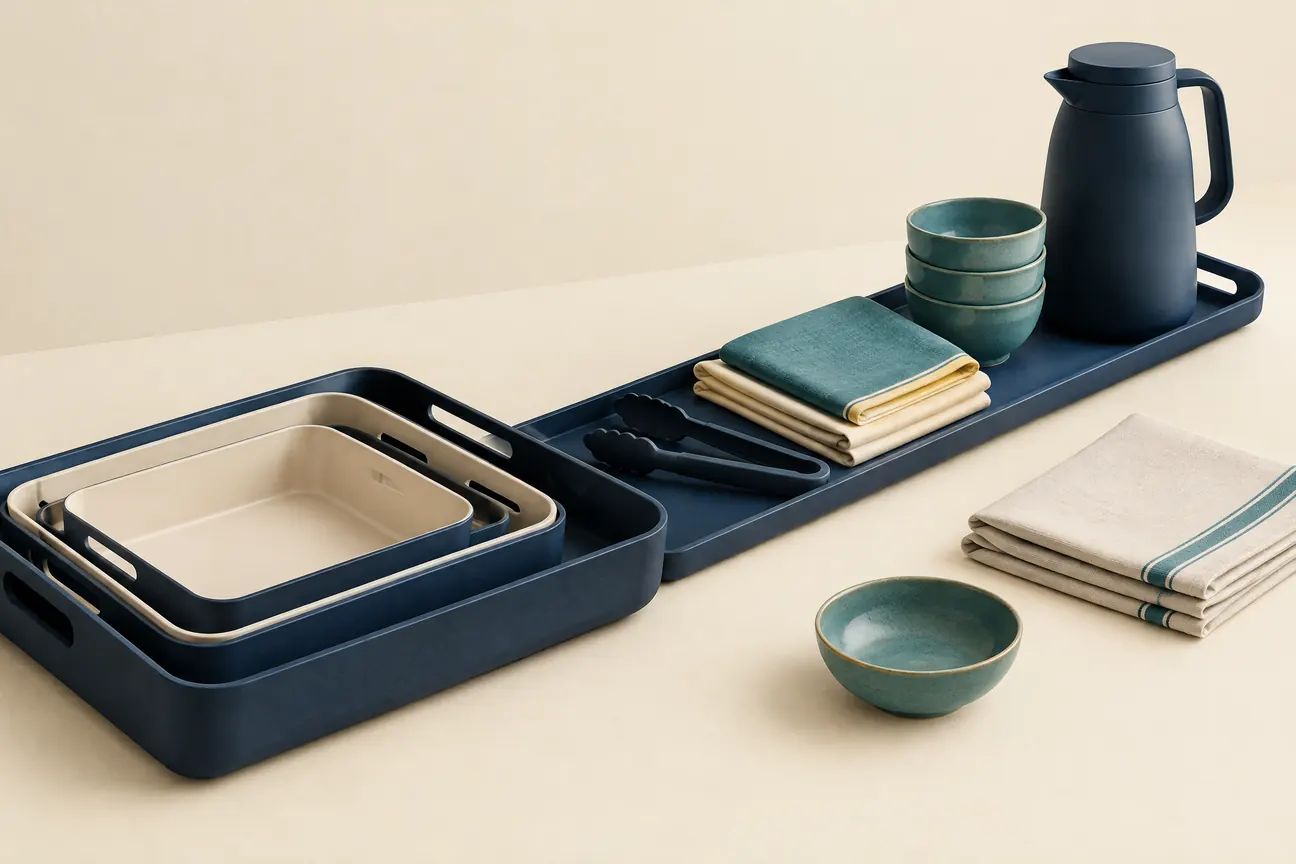
Agree arrival, handover and a change plan
Describe the complete delivery route: approved entrance, loading arrangements, lift access, floor and receiving room. Check these details with building management before presenting them as available. Agree an arrival window that allows for the actual receiving and setup work, while avoiding an unnecessary early wait for perishable food. Ask how food will be held until service and what the office must provide. The Centre for Food Safety explains that time outside temperature control is cumulative across handling, storage and transport; arrival does not start a fresh allowance. [3]
At handover, the receiving contact should reconcile the delivered items with the agreed order and check the general food condition, temperature and container integrity, as CFS advises. [3] Ask the supplier how to carry out any required temperature checks and what to do if conditions or quantities are not as agreed. CFS recommends hot food above 60°C and cold food at or below 4°C. [3] An air-conditioned meeting room is not evidence that these conditions are maintained. Where handling time is uncertain, the guidance favours prompt consumption, not extended display while speeches overrun.
Finish the brief with an authority and change plan. State who may approve substitutions or additional costs, and give the receiving contact access to the accepted order. If attendance, timing or the room changes, ask the supplier for an explicit response covering the affected food, service and total. A request sent is not an amendment accepted. If a presentation runs late, keep the agreed holding arrangements in place while discussing a revised service sequence. This turns the original enquiry into a practical handover document instead of leaving the day's decisions scattered across several messages.

| Proposed format | Useful reception setting | Space or work to plan | Quotation question |
|---|---|---|---|
| Individual food boxes | Guests seated for a short meal or counted distribution | An opening and eating surface, followed by container collection | What does each box contain, and which drinks and utensils are included? |
| Shared cold platters | Guests circulating with food available from a serving table | Reachable trays, serving utensils and appropriate cold holding | What are the actual quantities, and how will food be held before service? |
| Hot buffet dishes | A meal reception with room for a serving station | Approved holding equipment, replenishment and suitable access | Who provides equipment, operates it and removes it afterwards? |
| Attended small bites | Conversation-focused reception with limited eating surfaces | An agreed serving route and a clearly defined staff period | Which serving tasks and food quantities are covered by the total? |
| Office-supported platter service | A team able to supply verified tableware and setup help | Internal receiving, arrangement, assistance and washing duties | Which items can be omitted, and what responsibilities remain with the office? |
On a small screen, scroll the table sideways to compare.
Take it into everyday life
A practical checklist
- State confirmed diners, possible additional arrivals and whether guests eat in one group or in waves.
- Describe whether the food is light refreshment, a substantial snack or a replacement meal, with the service schedule.
- Attach usable table dimensions and a layout showing guest circulation, seating and the drinks point.
- List guest food questions and obtain information for the actual proposed menu before fixing it.
- Request item quantities, serving utensils, individual tableware and equipment-return details.
- Obtain an itemised total, separating required charges, optional additions and refundable deposits.
- Assign receiving, setup, guest assistance, replenishment and final clearing to agreed roles.
- Verify building access, holding arrangements and the receiving contact's copy of the accepted order.
- Record who can approve changes and require written acceptance of any revised scope and total.
Questions & answers
What should I send if attendance is still uncertain?
Send the confirmed diner count and a separate estimate of possible arrivals, with the point at which you expect to know more. Ask when quantities must be fixed and how an accepted increase or reduction would affect food and charges. Do not silently treat tentative invitees as either guaranteed diners or guaranteed absences.
Should the brief include office staff as well as visiting guests?
Include staff who are expected to eat, including hosts and presenters who stay for refreshments. Separately describe staff who only help with the event. That distinction keeps food quantities meaningful while showing the supplier how much internal assistance is actually available.
Can I compare quotations using only a per-person amount?
Use it only after the quotations describe the same diners, food purpose and service scope. Delivery, tableware, staff and other required items can make the final totals different. Ask how each price unit and any service charge is calculated, then compare the complete payable amount and terms. [1]
Does a budget category show that a service is lower quality?
No quality conclusion follows from the category alone. It may be a way to discuss a simpler menu or service scope, but you still need the actual quantities, inclusions, handling arrangements and total. Neither a low headline price nor a premium label replaces that enquiry.
What if our office has only one table available?
Share its usable dimensions and the surrounding layout. Ask whether the proposed containers, drinks and utensils will fit while leaving guests room to serve themselves. Consider another drinks point or seated distribution if feasible. Do not assume boxes solve the space problem: guests still need somewhere suitable to open and eat them.
Is delivery the same as full reception setup?
Not unless those tasks are explicitly included. Specify the handover location, who moves the food into the room and what arrangement work is required. Also clarify assistance during service, clearing and equipment collection; none should be inferred from the word delivery.
Can food wait in the meeting room if the presentation runs late?
Use the agreed food-specific holding arrangements and consult the supplier if the sequence changes. Room air conditioning does not establish proper hot or cold holding. CFS says time outside temperature control is cumulative, including transport, so you cannot assume a new storage allowance begins when the delivery arrives. [3]
How should I approve a substitution or a changed guest count?
Have the authorised organiser request a revised order identifying the changed items, quantities, service requirements and total. Obtain the supplier's acceptance, then give that version to the receiving contact. Keep the previous order for context, but make clear which version governs the handover.
Sources & further context
Numbered references follow the source order below. Merchant pages provide context for their own products or services; independent sources support relevant general reading, not merchant quality or medical suitability.